Reference: Data Journalism Handbook

Data Journalism Handbook

The Data Journalism Handbook is a free open source reference book for anyone interested in the emerging field of data journalism.

It was born at a 48 hour workshop at MozFest 2011 in London. It subsequently spilled over into an international, collaborative effort involving dozens of data journalism’s leading advocates and best practitioners – including from the Australian Broadcasting Corporation, the BBC, the Chicago Tribune, Deutsche Welle, the Guardian, the Financial Times, Helsingin Sanomat, La Nacion, the New York Times, ProPublica, the Washington Post, the Texas Tribune, Verdens Gang, Wales Online, Zeit Online and many others.

Comments Off
Jul 24

Reference: The Open Data Handbook

The Open Data Handbook

This handbook introduces you to the legal, social and technical aspects of open data. It can be used by anyone but is especially useful for those working with government data. It discusses the why, what and how of open data – why to go open, what open is, and the how to do open.

An Open Knowledge Foundation project.

Comments Off
Jul 24

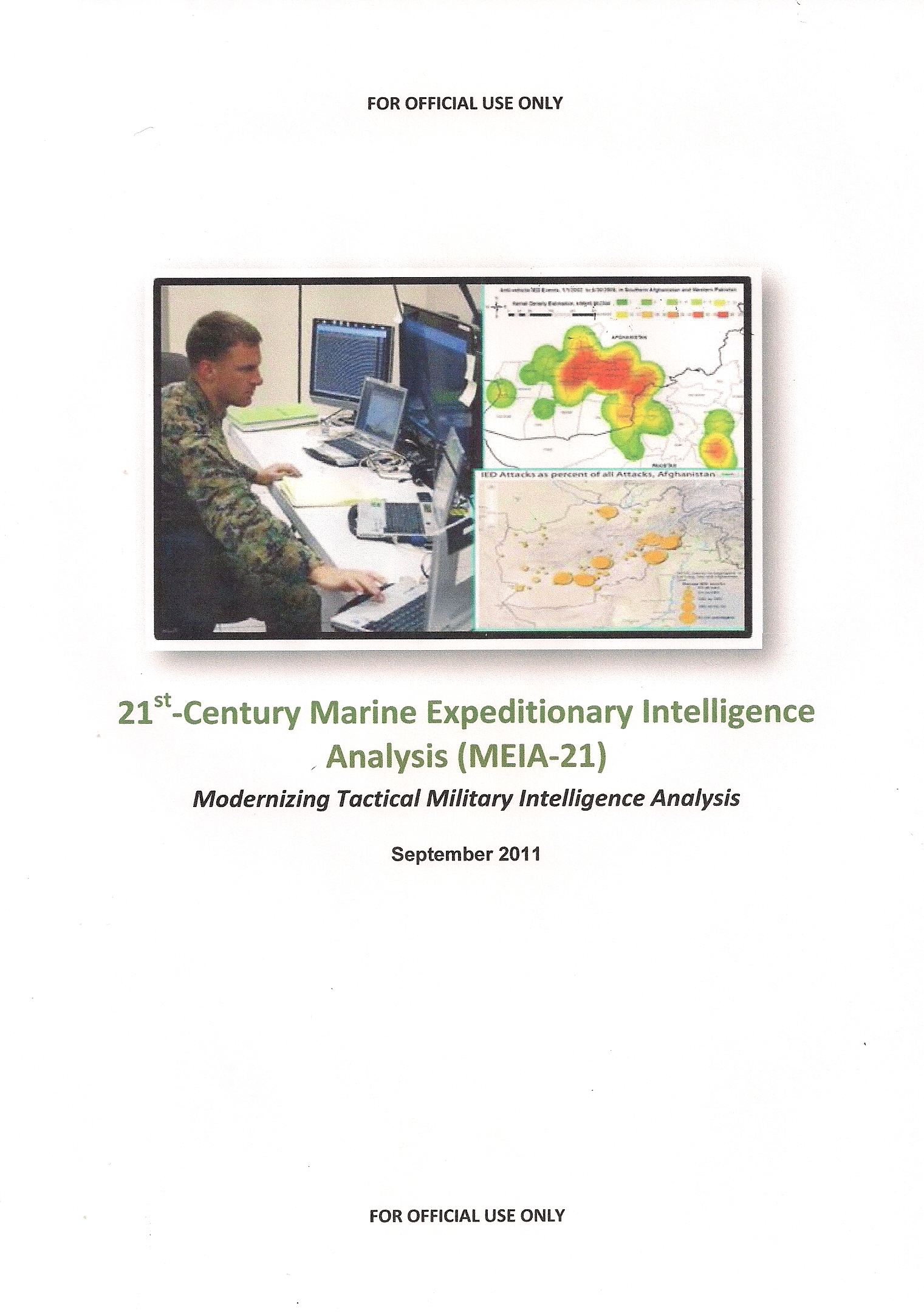
21st Century Marine Expeditionary Analysis (MEIA-21) – Modernizing Tactical Military Intelligence Analysis

Categories: Analysis

Click on Image to Enlarge

2011 USMC Expeditionary Analytics PDF

Online Source of Above Safety Copy

See Also:

NIGHTWATCH: A Brief History of Indicators Analysis

Comments Off
Sep 12

Reference: World Game Document One

Tags: ,

Click on Image to Enlarge

167 Page PDF

Comments Off
Apr 17

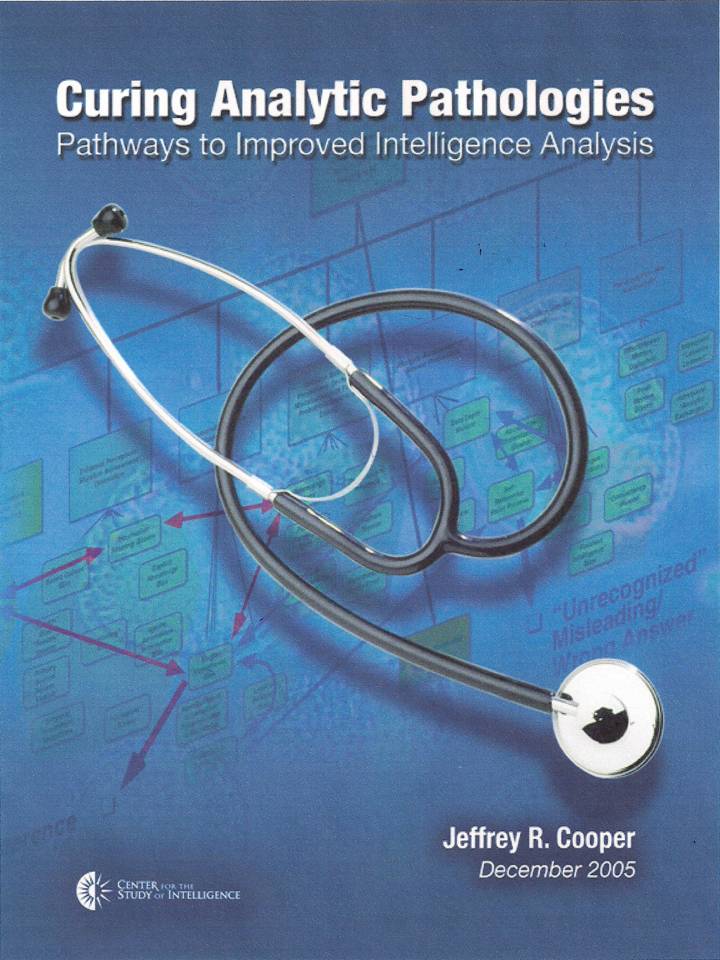
Handbook: Curing Analytic Pathologies

Categories: Analysis

Click on Image to Enlarge

Source (December 2005)

Read the rest of this entry »

Comments Off
Apr 9

Handbook: Democracy Primer on the Substance of Governance–52 Hard Questions and Answers

Democracy Primer

Democracy Primer

Comments Off
Aug 9

Law Enforcement: United Nations Office on Drugs and Crime Criminal Intelligence Training for Analysts

We really like this example of mutlinational handbooks, since they were developed using multiple sources (U.S. and other countries), and not restricted, and global in nature….not U.S. centric.

Analysts

Analysts

Aug 7

2000-2002 NATO OSINT Handbooks

NEW:

BGen James Cox, CA (Ret) On the Record on Open Source Information versus Open Source Intelligence versus Secret Intelligence

NATO OSINT to OSE/M4IS2 Round-Up

Click on Image to Enlarge

Click on Image to Enlarge

2001

NATO

Training OSS & SACLANT NATO OSINT Handbook

2002

NATO

Training SACLANT & OSS NATO OSINT Reader

2002

NATO

Training SACLANT NATO Intelligence Exploitation of the Internet

For the record:  Robert Steele wrote 85% of the first, and provided 85% of the second from conference proceedings.  The third was done almost entirely by LCdr Andrew Chester, RN Canada.  The first NATO document was in turn based on Steele’s writing of the first DIA OSINT Handbook in 1996.

Jul 17

1999 Relevant Information: New Approach to Collection, Sharing, Analysis

Relevant Information 1999

Relevant Information 1999

Comments Off
Mar 1

1997 Davis A Compendium of Analytic Tradecraft Notes

Tags:
Jack Davis

Jack Davis

PLATINUM Jack Davis, Virtual Dean of US All-Source Analytic Corps

For over three decades, Jack Davis has been the heir to Sherman Kent and the mentor to all those who would strive to be the world’s most effective all-source intelligence analysts.  As a Central Intelligence Agency analyst and educator, he combines intellect, integrity, insight, and an insatiable appetite for interaction with all manner of individuals regardless of rank and disposition.  He is the most able pioneer of “analytic tradecraft,” the best proponent for the value of human analysis over technical processing, and one of those very special individuals who helped define the end of 20th Century centralized analysis and the beginning of 21st Century distributed multinational multiagency analysis.

Note: Awarded in advance of IOP ’07 to celebrate Jack Davis’ 50th uninterrupted year as an all-source analyst and mentor to all analysts.

The Compendium is 45 pages in all and consists of a Foreword, Summary, and then ten Notes to Analysts:

Jack Davis

Jack Davis

Note 1:  Addressing US Interests in DI Assessments

Note 2: Access and Crediblity

Note 3: Articulation of Assumptions

Note 4: Outlook

Note 5: Facts and Sourcing

Note 6: Analytic Expertise

Note 7: Effective Summary

Note 8: Implementation Analysis

Note 9: Conclusions

Note 10: Tradecraft and Counterintelligence

Comments Off
Feb 11