NIGHTWATCH: Iran-Syria

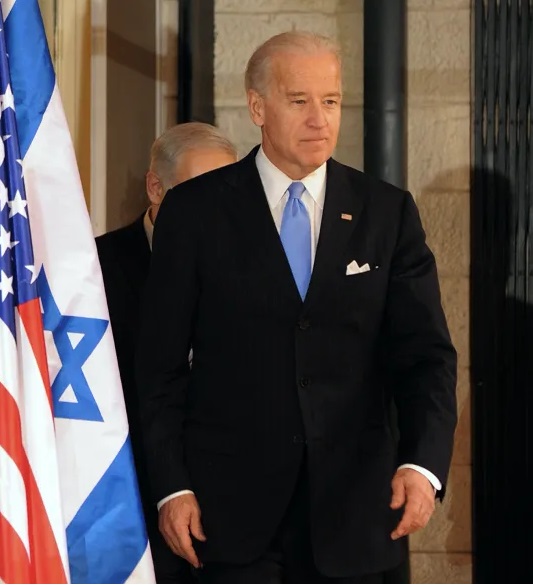
Iran-Syria: Iran rejected any Yemeni-like scenario in Syria, according to Deputy Foreign Minister Hossein Abdollahian who spoke to the press on 8 February at the Iranian Embassy in Damascus. Abdollahian added that Iranians recently kidnapped in Syria were released after Turkish mediation.

Comment: The visit by the Iranian Deputy Foreign Ministry corresponds to reports that the Commander of the Iranian Revolutionary Guards Corps-Qods Force Major General Sulemani had arrived in Damascus to assist in the defense of the Syrian Alawite government. At least one other news service reported — without good sourcing — that a large number of IRGC forces are present in Damascus.

Open sources are unable to confirm the reports about Sulemani’s visit and the presence of Iranian Revolutionary Guards Corps soldiers in Damascus. The logic of the situation is that Iran needs to take action to prevent a strategic disaster. The unconfirmed reports suggest it has begun to do so.

However, the deployment of Persians to Syria does not seem a likely first option. On the other hand, Sulemani, in person, might have gone to Damascus to offer his expert advice on destroying subversive movements.

All news services suggest that the struggle to control Homs will determine the future of the anti-al-Asad uprising. If that prediction is accurate, then the Alawites should win, provided that Bashar al-Asad and his generals have the same strength of will that his father and his generals had in ordering the destruction of Hama in February 1982, when Sunni rebels, including the Muslim Brotherhood, held the town briefly.

If the Syrian Sunni uprising hinges on the fate of Homs, it will lose, not only because the Alawites will not hesitate to destroy rebel enclaves in the town, but also because many residents of Homs will side with the government to destroy the outlaw gangs, posing as rebels, according to sources in Homs.

NIGHTWATCH KGS Home

See Also:

NIGHTWATCH: Syria, Russia, US, Iran, Israel, Lies, & Truth + RECAP

Comments Off
Feb 9

NIGHTWATCH: Syria, Russia, US, Iran, Israel, Lies, & Truth + RECAP

Syria: Special comment. Readers are rightly perplexed about conditions in Syria. Syrian press restrictions inhibit any neutral or balanced coverage. Everything reported from opposition sources and activists is biased and some reports of massacres include manufactured images, according to eyewitnesses.

International news descriptions of a worsening crisis receive no offsetting coverage of testimony from non-Sunni and non-opposition sources that little is occurring. The massacres are not taking place, occurring to sources that receive messages from Orthodox Christians living in Homs, for example. Life goes on in all of the towns and ports.

Skirmishes at checkpoints are the most common form of clash. That means four or five people fire a few rounds at four or five soldiers or policemen. Defectors are Sunni conscripts. The Syrian Army is about 60% conscript. Desertion is common in conscript armies. Defectors from the professional, full-time, non-conscript core of the force, most of whom are Alawites, have not been reported.

The point is that western media present one side of the struggle — that of the exiled Sunni politicians and activists with cell phones. Clips from social networking media are heavily one-sided and some are not authentic.

Limited communications from people caught in the middle, non-Muslims, suggest there is a lot less fighting and fewer deaths. Reports of carnage and massacres of hundreds do not seem to be accurate, except in opposition propaganda media.

Read the rest of this entry »

Comments Off
Feb 7

Reference: Truth, Lies and Afghanistan

Truth, lies and Afghanistan

How military leaders have let us down

LT. COL. DANIEL L. DAVIS

Armed Forces Journal,

I spent last year in Afghanistan, visiting and talking with U.S. troops and their Afghan partners. My duties with the Army’s Rapid Equipping Force took me into every significant area where our soldiers engage the enemy. Over the course of 12 months, I covered more than 9,000 miles and talked, traveled and patrolled with troops in Kandahar, Kunar, Ghazni, Khost, Paktika, Kunduz, Balkh, Nangarhar and other provinces.

What I saw bore no resemblance to rosy official statements by U.S. military leaders about conditions on the ground.

. . . . . . . .

Tell The Truth

When it comes to deciding what matters are worth plunging our nation into war and which are not, our senior leaders owe it to the nation and to the uniformed members to be candid — graphically, if necessary — in telling them what’s at stake and how expensive potential success is likely to be. U.S. citizens and their elected representatives can decide if the risk to blood and treasure is worth it.

Likewise when having to decide whether to continue a war, alter its aims or to close off a campaign that cannot be won at an acceptable price, our senior leaders have an obligation to tell Congress and American people the unvarnished truth and let the people decide what course of action to choose. That is the very essence of civilian control of the military. The American people deserve better than what they’ve gotten from their senior uniformed leaders over the last number of years. Simply telling the truth would be a good start. AFJ

Read full article.

See Also:

Marcus Aurelius: Col Paul Yingling, Departing

Comments Off
Feb 6

Josh Kilbourn: Raising Debt Ceiling, US Troops Into Libya, Undeclared War on Iran…

Joshua Kilbourn

Let’s see, 12,000 US troops going into Libya?  Undeclared war on Iran?  Absolute US guarantee of energy supply for Israel “no matter what?”  Whatever could we be borrowing money for?

Obama Sends Request To Congress For $1.2 Trillion Debt Ceiling Increase

Update:

  • HOUSE TO VOTE JAN. 18 ON OBAMA’S DEBT-LIMIT INCREASE REQUEST

Two days ago we wondered how long it would take for Obama to restart the debt ceiling theater. Not that long it turns out.

  • OBAMA SENDS CONGRESS REQUEST TO RAISE DEBT CEILING
  • OBAMA NOTIFICATION STARTS 15-DAY CLOCK FOR CONGRESS TO VOTE

So with Congress in recess, will Obama succeed in passing another automatic vote using base trickery? The same Obama, who as recently as 3 hours ago warned Congress that any attempts to pass approval on the Keystone Pipeline without his involvement are “counterproductive”… In other news, America’ new debt ceiling of $16.3 trillion, or 107% of GDP is now just a formality, about to be interrupted by a little circus clowning.

Read full article with Bloomberg quote.

Comments Off
Jan 12

Mini-Me: Occupy 9/11 Emergent – War by Deception 2011 – The shadow government and shadow economy

Who? Mini-Me?

Occupy 9/11 is emergent. This film, loaded on 1 February 2011, is now going viral. At 2:28:42, this is one of the best documentaries on the topic, and it is free online.

YouTube War by Deception 2011

Phi Beta Iota:  This is an extraordinary contribution.  It is highly recommended for students as well as adult learning clubs; it provides the best “overview” in one place.

See Also:

9-11 Truth Books & DVDs (33)

Comments Off
Dec 29

Marcus Aurelius: Last Word on Iraq – in Pictures

Marcus Aurelius

The last word — as with Viet-Nam, we did not lose the battles…

See Also:  Iraq (48 Reviews)

And Especially:

Review: We Meant Well – How I Helped Lose the Battle for the Hearts and Minds of the Iraqi People

Review: Grand Theft Pentagon–Tales of Corruption and Profiteering in the War on Terror

Review: The Occupation of Iraq: Winning the War, Losing the Peace

Review: Losing the Golden Hour–An Insider’s View of Iraq’s Reconstruction

Worth a Look: Book Reviews on War Complex—War as a Racket

Click on Image to Enlarge

Comments Off
Dec 26

Marcus Aurelius: The Future of Afghanistan – and US Policy

Marcus Aurelius

The Future of Afghanistan and U.S. Foreign Policy

Foreign Affairs Snapshot, December 15, 2011

In Afghanistan, even minimally accountable democracy may soon be beyond reach. If so, some form of constrained warlord rule will be the most that’s achievable.

The Three Futures for Afghanistan

Snapshot, December 16, 2011

Success in Afghanistan would not be as difficult or expensive as it was for the United States to win wars in Europe or counter the communist threat. Given the risks and the opportunities ahead, an investment in South Asia is worth making.

The Case for Continuing the Counterinsurgency Campaign In Afghanistan

Snapshot, December 16, 2011

The drawdown in Afghanistan may be afoot, but racing for the exits will leave large parts of the country — especially around Kabul in the east — infested with insurgent havens.

A Shift in the Afghanistan Strategy

Letter From, December 1, 2011

The drawdown of U.S. and NATO forces in Afghanistan will proceed rapidly through 2014. As a consequence, the mission will change sooner than many people expect, and that means the fledgling Afghan National Army has to take charge of the fight now.

Afghanistan's Lost Decade

Snapshot, December 15, 2011

Judged by any yardstick, Afghanistan has made little progress since 2001. The United States and its allies have bred an overly centralized and ineffective government in Kabul that is hooked on foreign aid and struggles against a resurgent Taliban. Without serious reforms, the next ten years could be worse.

Washington's Colonial Conundrum in Afghanistan

Snapshot, December 15, 2011

In Afghanistan, the United States faces a choice: either establish a permanent administrative and security presence, or stand back and risk the country becoming a haven for organized criminals and terrorists. Staying forever won’t work, so Washington must accept the risks of withdrawal.

An Absence of Strategic Thinking

Snapshot, December 16, 2011

The U.S. withdrawal from Afghanistan is driven largely by domestic politics. That is a privilege of a country that is both rich and safe. But the United States has security interests in Afghanistan and Pakistan that, despite its best attempts, it will not be able to ignore.

Phi Beta Iota:  Nowhere in this edition of Foreign Affairs is there any reference to an over-arching strategic model that is reality-based and focused on the public interest.  Instead, what we have here are a variety of ideological viewpoints that are totally lacking in any sort of “true cost” accounting analytics.

Comments Off
Dec 19

Chuck Spinney: German Economic Imperialism Killing Europe?

Chuck Spinney

Will Germany Kill the Goose that Laid the Golden Egg?

Since the middle of the 19th Century, the central questions in European politics have been been have been the closely connected questions of nationalism and the rise of German power.  As my good friend and eminent historian Gabriel Kolko shows in the brilliant essay attached below, the post war solutions of NATO and the European Union, together with the exigencies of the Cold War, put these questions on hold, but their fundamentals remained, sleeping beneath the surface, and today, the conflicting questions of nationalism and German power are again coming to the fore to create ominous problems for Europe and the world.
There can be no question that, until 2007 or so, the European Union — particularly the opening of borders, the free flow of labour and capital, the disappearance of tariffs, and diminution of non-tariff trade restrictions, etc. combined to make life better for the mass of average Europeans.  Standards of living rose steeply and social services improved in parallel.  This was particularly evident in the poorer EU countries on the southern rim.  I saw and experienced this astounding improvement in the quality of life on a very personal level, living on a sailboat in southern Europe since the summer of 2005.  I will never forget the comment made to me by an Italian psychologist in Calabria in 2006, which is the heart of the provincial south of Italy, “It is a great time to be a European.” To be sure, he was an educated member of the upper middle class, and not representative of the average Calabrian, but it struck me that this Calabrian saw himself as a European.  It was not very long ago, that such a person would only loosely consider himself to be an Italian, not to mention a European.
Comments Off
Dec 18

Chuck Spinney: Political Fluff on Iraq vs Real-World Appraisals

Chuck Spinney

After running for President in 2008 on a platform that criticized Iraq as a “dumb war,” Barack Obama just declared America’s misbegotten Iraqi adventure to be an “extraordinary achievement” in a speech to soldiers at Fort Bragg. That declaration of success is not enough for Congressman Duncan Hunter, who took Obama to task, saying, “And even now, as president, he refuses to acknowledge that victory was achieved,”

Such is the self-referencing nonsense produced in contemporary American political discourse shaped by a perpetual election cycle that disconnects debate from the real world and stifles rational governance, but keeps the masses entertained and distracted, much like the circuses did for the Roman masses in the waning days of the Empire. With American politicians are arguing endlessly how great a victory we achieved in Iraq, a natural question remains unasked: What does the rest of the world — particularly the Arab world — thinks of our ‘success’?

Attached, FYI, are two thoughtful alternative points of view on this question.

The first headline is from Rami Khouri’s.  He is a columnist for the Lebanese Daily Star and is syndicated by the prestigious Agence-Global. The second headline is from Patrick Cockburn’s, writing in the Independent [UK].  He is one of the most well informed western reporters now writing about the Middle East.

Praise Tunisia, not the Iraqi nightmare

By Rami G. Khouri, Daily Star, 14 December 2012

The United States under President George W. Bush drew on a deep well of nonsense, lies and fantasy when it entered Iraq in 2003. President Barack Obama continued this bipartisan American tradition when he said Monday that the departure of American forces from Iraq left behind a country that can be a model for other aspiring democracies. On the other side of the Arab world on the same day, the Tunisian people elected a new president, providing a more credible example of how Arabs can aspire to become democratic without foreign armies destroying their national fabric.  Read more.

Wars without victory equal an America without influence

World View: For all its military might, the US has failed to get its way in Afghanistan and Iraq, severely denting the prestige of the world’s only superpower
Patrick Cockburn, Independent, 12 December 2011

Phi Beta Iota:  Mr. Cockburn’s article contains one major assumption, to wit that the US  Government will not attack Iran nor condone an Israeli attack on Iran.  We disagree.  Now more than ever, Israel is bent on attacking Iran and drawing the US in–the deployment of US/NATO troops all around Syria, the plans for major NATO air operations ostensibly against Syria (long billed, falsely, as an Iranian puppet state) all point to precisely the opposite: a cresendo joint US-Israel mega-attack on Iran and Syria together.

Comments Off
Dec 15

Chuck Spinney: Break-Up of Iraq, History of Oil Invasions

Chuck Spinney

The below report by Patrick Cockburn, one of the best reporters now covering the Middle East, describes the growing tensions in Iraq over the question of sharing its oil wealth among its constituent regions.  Although his report is important in its own right, its contents become even more ominous when they viewed in a larger historical context:

The long view of history is likely to record the greatest ‘sins’ of Iraq, Iran, and Libya prompting interventions by the West have been related to the control of oil — not nuclear weapons; not any communist leanings during the Cold War; not support of worldwide terrorism.

Each country committed the unforgivable sin of being governed at one time by nationalistic leaders who believed the oil under each country belonged to that country and should be controlled by the government of that country — therefore, these leaders had to be removed:

  • Iran - Mohammed Mosaddegh, a popularly elected Prime Minister of Iran and social reformer, removed by a CIA/MI6 coup in August 1953.
  • Iraq – Saddam Hussein, a murderous neo-Stalinist dictator and social reformer (e.g., major achievements in women’s rights and education), removed by military force in 2003.
  • Libya – Muammar Qaddafy, a quirky tribal dictator and social reformer (e.g., major achievements in women’s rights and education) removed by military force in 2011.

Click on Image to Enlarge

One short-term common denominator in these imposed regime changes was that the nationalist leader was replaced by a more compliant government that agreed to an opening of that country’s oil fields to exploitation by privately owned western oil companies.

While history does not repeat itself, memories of the past condition events in the future.  Over the longer term, perceived wrongs are not forgotten, and such interventions can provoke blowbacks, which in turn provoke counteractions that enmesh the intervener in a welter of increasingly complicated conflicts.  In the case of Iran, for example, the 1953 coup eventually backfired in 1979, when  Reza Shah Pahlavi was overthrown by the Islamic revolution led by the Ayatollah Khomeini.  Khomeini then established a regime retook control of Iran’s oil fields, among other things.  But the Iranian game is not over, and the historical pattern of move and countermove is in play, with the nationalist (Islamic) regime of Iran again in the West’s crosshairs, allegedly because of its nuclear ambitions and support of international terror.  Nevertheless, the glittering temptations of re-privatizing Persian oilfields are lurking in the background, attracting the private oil capitalists of the West like flies to honey.

Finish long comment from Spinney, plus reference, plus See Also.

Read the rest of this entry »

Comments Off
Dec 12

Warning: Unknown: failed to open stream: No such file or directory in Unknown on line 0

Fatal error: Unknown: Failed opening required '/data/16/1/35/61/1850387/user/2008605/cgi-bin/root.ini' (include_path='.:/usr/services/vux/lib/php') in Unknown on line 0