Event: 19-23 March Online – Second Announcement

CHANGE IS MADE BY THOSE WHO TURN UP

Europe’s World is proud to be a partner of the 2012 Security Jam, a massive online brainstorm from 19 – 23 March 2012, bringing together thousands around the world to find concrete solutions to global security issues, and encourages you to register now to interact with VIPs such as Adm. James Stavridis, NATO SACEUR; Csaba Hende, Hungarian Minister of Defence; David Heyman, US DHS Assistant Secretary for Policy; Maciej Popowski, EEAS Deputy Secretary General for Inter-institutional Affairs; Claude-France Arnould, EDA Chief Executive; Gen. Stéphane Abrial, NATO SACT and thousands of experts from the broadest possible security and defence spectrum. Registration is free of charge and takes just a minute.

Brainstorm with thousands of experts and VIPs on:

STRATEGIC PARTNERSHIPS   .   FACING THE CYBER CHALLENGE   .   LESSONS LEARNED: LIBYA & AFGHANISTAN   .   INTERNATIONAL COOPERATION   .   TRANSNATIONAL HYBRID THREATS   .   CRISIS MANAGEMENT   .    FUTURE CAPABILITIES & TECHNOLOGIES

10 top recommendations will be presented to the global leaders ahead of the May 2012 G8 and NATO summits. Will one them be your idea?

Gain exclusive insightinto the latest trends and developments in global security.

Extend your network through full integration with social media platforms.

www.securityjam.org

Comments Off
Mar 8

Yoda: Child-Driven Education, Convergence of Knowledge

Got Crowd? BE the Force!

How Children’s Toys Reflect What’s Next in Technology & Education, March 5, 2012, PRAGMATIC VISIONS | by Jim Brazell 

[Editor’s note: This is the first in a new column series from the pragmatic visionaries at the Thornburg Center for Professional Development for edtech digest]

“The availability of technologies to youth is its own instructor.” –Nobelist Herbert A. Simon (June 15, 1916 – February 9, 2001), Author of Science of the Artificial and a Father of Artificial Intelligence

EXTRACT:  TOYS MIRROR WHAT’S NEXT IN TECHNOLOGY

In the same way that Erector Sets were patterned after the technologies of the third phase of the industrial revolution, the LEGO MindStorms kits reflect the structure of emerging technology and careers in the 21st Century. In 2006, Nano Quest from FIRST Robotics enabled students to program LEGO robots to mimic biological, chemical, and physical systems across  micro-, meso-, and nano-scales.

Read the rest of this entry »

Comments Off
Mar 8

Betty Boop: Stratfor as a Neo-Con / Mossad Scam

Responding to Richard Wright: USMC “Learns” From StratFor – Integrity? – We Don’t Need No Stinkin’ Integrity

Back in 2002 while I was at a major Command, Friedman made a pitch to provide “ground truth” intelligence on contract.  While some folks went gaga over his presentation, there were many small indicators that all was not well.  Apparently Friedman was asked to leave LSU for reasons undetermined.  Offically, according to STRATFOR ” In 1997, a small company that would eventually grow into Stratfor—called Strategic Intelligence LLC—left Baton Rouge and LSU, where its founder George Friedman had been a professor. A 1999 profile in Texas Monthly said the company “couldn’t thrive” in Baton Rouge, and that’s why Friedman took it to Austin, where it blossomed into a global powerhouse.”

Reasoning heard on the street by colleagues active in San Antonio, he was bankrolled by Mossad and they wanted him in an area of hightech.

I have read his comments about OSS and you specifically; his arrogance is unbelievable.  His “analysts” are currently UT-Austin students with a couple of “seasoned veterans”, none of whom have an intelligence
background.

He has been described as a neocon and I think that fits.  From where I sit, I think STRATFOR is finished, they are trying very hard to regain their client base….with little success…

Read the rest of this entry »

Comments Off
Mar 8

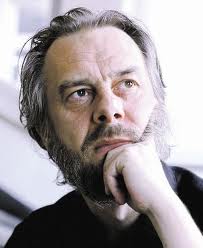
Worth a Look: Dr. James Wilk, Change Agent

Dr. James Wilk

Personal Page at Oxford

EXTRACT:  Armed with this conviction about “where the action is,” I found my philosophical research invariably led me into study and research within each of the scientific fields with which my conceptual inquiries shared a sufficiently long border, including inter alia neuroscience, cybernetics, complexity theory, semiotics, perceptual control theory, communication theory, psychology and psychoanalysis. I pursued these empirical studies in depth alongside my work in analytic philosophy, and so accordingly, for what it’s worth, my academic credentials have come to include degrees in cybernetics (from Brunel University—in the former Institute of Cybernetics) and in social sciences and neuroscience as well as philosophy (from Oxford), among other things, grounding my philosophical inquiries with training and research on the empirical side of the fence.

“Philosophy Without Arguments: Think Before You Think”

EXTRACT:  Academic philosophy has lately made a fetish of arguments in the sense of disputation, in place of arguments in the sense of argumentation to establish the reasonableness or otherwise of conclusions reached.  A more and more arcane, deliberately exclusive technical vocabulary has largely displaced a long tradition of philosophical writing accessible to those from other disciplines.  Philosophers have increasingly been talking only to themselves, and in voices increasingly shrill.  Competition thriving on disagreement has replaced cooperation in the service of reaching agreement.  Technical, often pseudoscientific logic-chopping and internecine disputes, spurred on by what Freud called “the narcissism of minor differences,” have replaced an overriding interest in cooperative engagement with colleagues outside philosophy, in the humanities and in the sciences.  Dogged by false oppositions between logic and rhetoric, the empirical and the conceptual, philosophers for the first time in modern intellectual history have found themselves operating in a vacuum.

The Oxford don with tiny answers

EXTRACT: Four of the largest books in Wilk’s library — where he keeps his kaleidoscope collection — comprise his thesis. His friends call it “the slab”. Its title is Principium Metamorpholigica. Metamorphology, from metamorphosis, is, according to Wilk, a “nascent discipline” concerned with the science of change. So far, Wilk is its only practitioner. His thesis is highly technical, drawing on the work of cyberneticians such as Gregory Bateson and DJ Stewart, who supervised the doctoral work. Its central argument: that change is instant and easy, no matter how large the system.

The Science of the Nudge: Minimalist Intervention and the Nature of Change

a one-year introductory course on the philosophical and scientific understanding of change
and its application in rapidly pinpointing minimalist interventions

Interchange Know-How (Company Site)

EXTRACT: Each Interchange design session normally results in a pertinent and elegant solution that can be implemented at once, with immediate and bankable results, only occasionally requiring a second or third session to secure the client’s objectives. Daunting challenges and ambitious objectives—regardless of how longstanding and intractable, . . . or new, daring and unprecedented—can be successfully addressed and secured within days or weeks, and executives can accordingly dispense with normal expectations of feasibility and timescales. In place of high-risk, high-profile, high-cost initiatives, Interchange enables clients to achieve the same or better results reliably—in a fraction of the time—through low-risk, low-profile, catalytic interventions or “nudges” whose marginal cost of implementation is typically negligible.

Interchange Know-How

Comments Off
Mar 7

Worth a Look: Free Internet Search & Research Tools

Home Page


Search Engines

Kid Friendly and Educational Search Engines

Meta & Mega Search Tools

Phone Number, People and Company Finders

Social Media and Real-Time Search and Collaboration Tools

Video/Multimedia

Deep Web and Specialty Research Tools

Username Search

Maps/Geographic/Transportation

Useful Web Sites, Tools and Documents

Proxy Servers, Online Privacy and Security Tools

News

Image Search

Online Communities

Whois, IP Lookups and Web Site Analysis

Reference Sites

Language Tools

Comments Off
Mar 6

Lord James of Blackheath: 2009 to 2010 Massive Money Laundering Between USA, England, and Scotland — Three Possibilities

Lord James of Blackheath, House of Lords [VIDEO 11:10] from 2010, now circulating

Breaking news Lord James of Blackheath has spoken in the House of Lords holding evidence of three transactions of 5 Trillion each and a transaction of 750,000 metric tonnes of gold and has called for an investigation.

I think there are three possible conclusions that may come from it. I think there may have been a massive piece of money laundering committed by a major government which ought to know better and that it has effectively undermined the integrity of the British bank the Royal Bank of Scotland, in doing so. The second alternative is that a major American department has an agency that has gone rogue on it because it has been wound up and has created a structure out of which they are seeking to get at least 50 billion Euros as a payoff. And the third possibility is that this is an extraordinarily elaborate fraud which has not been carried out but which has been prepared in order to provide a threat to one government or more if they don’t pay them off. So there are three possibilities and this all needs a very urgent review.

My Lords, it starts in April and May of 2009, with the alleged transfer to the United Kingdom, to HSBC of a sum of 5 trillion dollars and seven days later, in comes another 5 trillion dollars to HSBC, and then 3 weeks later another 5 trillion. 5 trillion in each case. Sorry. A total of 15 trillion dollars is alleged to have been passed into the hands of HSBC for onward transit to the Royal Bank of Scotland and we need to look at where this came from and what the history of this money is. And I have been trying to sort out the sequence by which this money has been created and from where it has come from for a long time.

http://www.rumormillnews.com/cgi-bin/forum.cgi?read=230593

http://www.publications.parliament.uk/pa/ld201212/ldhansrd/text/120216-0002.h…

Comments Off
Feb 20

2012 PREPRINT AS SUBMITTED: The Craft of Intelligence

Download 20 page document:
Steele The Craft of Intelligence 2.7

The Craft of Intelligence [Version 2.7]

Robert David Steele

Full chapter below the line.

Read the rest of this entry »

Comments Off
Feb 17

Video: Evolution of “Big Brother” (Uncle Sam)

Comments Off
Feb 10

Robert Steele: Intelligent Management of Intelligence Agencies, and the New Craft of Intelligence

Robert David STEELE Vivas

I have begun drafting my portion of the new Handbook of Intelligence Studies (Routledge, 2013), it is a chapter early on entitled “The Craft of Intelligence.”  I pick up where Allen Dulles and Sherman Kent left off.  My graphic on Intelligence Maturity captures the essence of my thinking at the strategic level, but of course there is more to come, including the desperate need to restore integrity to all that we do.

In 1988 I ghost-wrote for the Commandant of  the Marine Corps an article that he enhanced and signed, “Global Intelligence Challenges in the 1990′s.”  At that time my focus was on the difference between the conventional threat and the emerging unconventional threat.

Now my focus is on the purpose and process of intelligence as decision-support.  We must — we will — move from secret intelligence for the few to open intelligence for the many; from expensive centralized largely worthless intelligence to free and low-cost distributed intelligence relevant to every person at every level on every issue; from intelligence as window-dressing for channeling $80 billion a year to banks and corporations, to intelligence as an integral element of every aspect of a Smart Nation.

Today Owl sent me a link to an article, Philip E. Tetlock and Barabara A Mellers, “Intelligent Management of Intelligence Agencies,” American Psychologist, 2011, pp. 1-12.  I  respect Owl, so I printed it and read it twice.

This article is completely out of touch with reality and the authors have not bothered to familiarize themselves with the literatures pertinent to their endeavor.  Out of 89 cited sources 12 are non-intelligence-related prior publications of the lead author, 1 is a prior publication of the second author, and 11 are ostensibly about intelligence but truly marginal selections.  So 12% sources on the subject, 13% self-citation, and 75% escoteric psycho-babble irrelevant to the actual challenge.  As an intelligence professional, I am offended that two ostensibly erudite individuals would dare to publish this trype without even a semblance of understanding of the subject under discussion.

See Also:

Robert Steele: The Craft of Intelligence – OLD vs. NEW

Here are a few comments and additional links:

Read the rest of this entry »

Comments Off
Feb 10

John Robb: Four Sources of Trust, Crypto Not Scaling….

John Robb

Why The Global System is Killing Trust

Posted: 09 Feb 2012 03:35 PM PST

Trust is an essential building block of any economic and social system.  Systems that attempt to operate without it inevitably fail.  A loss of trust typically preceeds a collapse in legitimacy.

That’s our future.  Here’s why:

Let’s start with a philosopher “king” of crypt0-security, Bruce Schneier.  He has a new book out called Liars and Outliers: Eneabling the Trust that Society Needs to Thrive (Wiley, 2012).

The book is all about the mechanisms for building trust.  There are four mechanisms:

  • moral controls,
  • reputational pressure (shame),
  • institutional pressure (legal system), and
  • security controls (encryption, locks, etc.).

He contends (rightly) that in the modern world, we don’t typically make/have the personal relationships required to build moral and reputational trust.  We typically make impersonal relationships when we interact with a global economic system (you buy stuff made by people you don’t know).  As a result, we rely up on institutional (legal compliance) and security (to guard against bad behavior) to provide the level of trust necessary to make the global economy work.

There are two massive problems with that.

Legal compliance is increasingly a farce.  Take the mortgage settlement the US government and the financial industry reached over rampant fraud in mortgage lending.  I wrote a bit more about it on the Resilient Community blog if you want more detail.   What does this mean?  That even at the national level in a “developed country” it is impossible to use legal means to enforce trustworthiness (let’s not even talk about compliance at the global level).  It’s doesn’t work anymore.  It’s just too easy for anybody with financial means, to buy off country’s legal system for pennies on the dollar (to the damage caused).  The compliance system is broken.

So, that leaves us with security as the only way to prevent bad actors from running away with the global system.  This leads me to a great presentation I heard yesterday by Dan Geer.   He’s another philosopher “king” of crypto-security (but for the CIA).  Very smart guy.   He made a convincing case that security is scaling slower than data, bandwidth, node, and user growth.  It is falling behind and will continue to fall behind as the global system grows.

Upshot:  it’s already nearly impossible to secure big organizations. Every Fortune 500 company has and will continue to compromised. The government’s systems are already a sieve.  There’s almost nothing that can be done about it and it will get increasingly worse. Forget about securing a single person trying to connect to the global system.  They are just sheep ready for slaughter.

So, what happens now?

The global system will continue to grow.  Trust will continue to leak as attempts at compliance and security fail to work effectively.  The economic depression we have already started gets worse and worse and worse.  Disorder erupts.  It grows….

Is there a solution?  An alternative form of social order that can provide a scalable global solution?

Yes.  Resilient communities.  Resilient communities rescale your life down to a rational level.  They make personal relationships with the people that economically interact with you possible (again).

Hey, let the rest of the world sink into the squalor of a trust free world.   It will make that system easier to trounce in head to head competition for people.

See Also:

Robert David Steele, THE OPEN SOURCE EVERYTHING MANIFESTO: Transparency, Truth, & Trust (Evolver Editions, 5 June 2012)

and

Robert Garigue at Phi Beta Iota

Comments Off
Feb 10