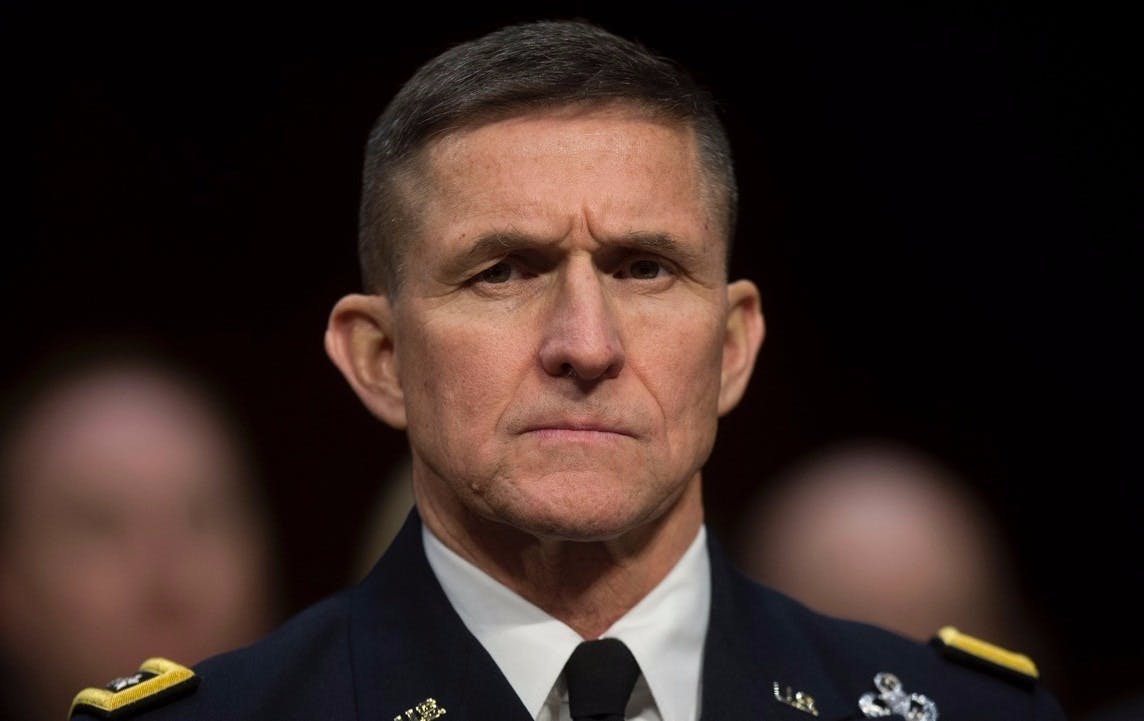
Ralph Peters: Testimony to Congress on Pakistan As a Failing Empire, Focus on Baluchistan

Ralph Peters

Subcommittee on Oversight and Investigations
House Committee on Foreign Affairs
Baluchistan Hearing, February 8, 2012
Testimony of Ralph Peters, military analyst and author

“PAKISTAN AS A FAILING EMPIRE”

2012-02-09 Ralph Peters House Testimony, Baluchistan and Pakistan (8 pages, doc)

Introductory remarks: This testimony arises from three premises.

First, we cannot analyze global events through reassuring ideological lenses, be they left or right, or we will continue to be mistaken, surprised and bewildered by foreign developments. The rest of the world will neither conform to our prejudices nor behave for our convenience.

Second, focusing obsessively on short-term problems blinds us to the root causes and frequent intractability of today’s conflicts.  Because we do not know history, we wave history away.  Yet, the only way to understand the new world disorder is to place current developments in the context of generations and even centuries.  Otherwise, we will continue to blunder through situations in which we deploy to Afghanistan to end Taliban rule, only to find ourselves, a decade later, impatient to negotiate the Taliban’s return to power.

Third, we must not be afraid to “color outside of the lines.”  When it comes to foreign affairs, Washington’s political spectrum is monochromatic: timid, conformist and wrong with breathtaking consistency.  We have a Department of State that refuses to think beyond borders codified at Versailles nine decades ago; a Department of Defense that, faced with messianic and ethnic insurgencies, concocted its doctrine from irrelevant case studies of yesteryear’s Marxist guerrillas; and a think-tank community almost Stalinist in its rigid allegiance to twentieth-century models of how the world should work.

If we do not think innovatively, we will continue to fail ignobly.

Read the rest of this entry »

Comments Off
Feb 9

TEDxAmsterdam 2011 – General Peter van Uhm

Tip of the Hat to Berto Jongman.

Phi Beta Iota:  Below is a typical comment.  Sadly, for this to be true, INTEGRITY in government is required.  As we have seen from Dick Cheney’s hijacking of the US Government — and Obama’s continuation of the Bush-era “war as a racket” policies now including the murder and imprisonment of US citizens without due process — sometimes the government’s monopoly on force is the basis for a failed state, not its anti-thesis.

Very inspiring talk, i listened in silence to him and that doesn’t happen often.

As an ex VN soldier i fully support the generals opinion.

Even after losing his own son in Afghanistan he still firmly believes in his ideals and knows how to express them on a way that is understandable and inspiring to allot of people, i can only say general van Uhm made me proud to be Dutch today, and proud i served in the Dutch armed forces.

Comments Off
Dec 17

Robert Steele: Twitter Burns Google / Facebook

Robert David STEELE Vivas

This is fascinating at multiple levels.  Neither Google nor Facebook have been effective at helping humans “make sense,” now it appears that Twitter–perhaps combined with Hypothes.is–just might be a hair away from creating the skeleton of the World Brain.

Twitter Just Fired A Cannonball At Facebook And Google+

Matt Rosoff

Business Insider, 8 December 2011

Twitter is revamping the service with personal Twitter profile pages, a new timeline that includes rich media and other related informationembedded into tweets, and easier search for information based on @ symbols (usernames) and hash tags.

Talking at Twitter’s unfinished new headquarters building in San Francisco, founder Jack Dorsey and CEO Dick Costolo explained that the changes are meant to make Twitter more accessible to everybody.

Their three goals:

  • Expose the “universe within every tweet.” Tweets aren’t just 140 characters — there’s also context like retweets and replies, and embedded content like videos, images, and songs. Today, accessing this material still feels like opening a “side drawer,” said Costolo.
  • Make Twitter less obscure to use. Today, the @ and # symbols are too obscure — people don’t know what they mean. This contributes to a lot of people visiting Twitter but not really participating actively. The redesign surfaces these symbols and makes them the gateway to find out more infrmation about people and topics on the surface.
  • Share it with everybody. The world has 7 billion people. Most of those people are “not yet on Twitter,” said Costolo. The redesign will roll out to mobile devices simultaneously, and is streamlined to load up to 500% faster.

The trick is doing this without adding too much complexity. As Dorsey put it, “simplification is the key here.”


Comments Off
Dec 8

Mini-Me: Cuba-Venezuela Unite the South – CELAC

Who? Mini-Me?

Gringos?  We don’t need no stinkin’ gringos…

A Union is Born: Latin America in Revolution

The Community of Latin American and Caribbean States (CELAC)

by Eva Golinger

Global Research, December 8, 2011

While much of the world is in crisis and protests are erupting throughout Europe and the United States, Latin American and Caribbean nations are building consensus, advancing social justice and increasing positive cooperation in the region. Social, political and economic transformations have been taking place through democratic processes in countries such as Venezuela, Bolivia, Ecuador, Nicaragua, Uruguay, Argentina and Brazil throughout the past decade, leading to a massive reduction in poverty and income disparity in the region, and a substantial increase in social services, quality of life and direct participation in political process.

One of the major initiatives of progressive Latin American governments this century has been the creation of new regional organizations that promote integration, cooperation and solidarity amongst neighboring nations. Cuba and Venezuela began this process in 2004 with the founding of the Bolivarian Alliance for the Peoples of Our America (ALBA), that now includes Bolivia, Ecuador, Nicaragua, Dominica, St. Vincent’s and the Grenadines and Antigua and Barbuda. ALBA was initially launched in response to the US government’s failed attempt to impose its Free Trade Agreement of the Americas (FTAA) throughout the region.

Click on Image to Enlarge

Today ALBA is a thriving multilateral organization with member nations that share similar political visions for their countries and for the region, and includes numerous cooperation agreements in economic, social and cultural areas. The fundamental basis of trade amongst ALBA nations is solidarity and mutual benefit. There is no competition, exploitation or attempt to dominate amongst ALBA states. ALBA even counts on its own currency, the SUCRE, which allows for trade between member nations without dependence on the US dollar.

In 2008, the Union of South American Nations (UNASUR) was formally established as a regional body representing South American states. While ALBA is much more consolidated as a unified political voice, UNASUR represents a diversity of political positions, economic models and visions for the region. But UNASUR members share the common goal of working towards regional unity and guaranteeing the resolution of conflicts through peaceful and diplomatic means. UNASUR has already played a key role in peacefully resolving disputes in Bolivia, particularly during an attempted coup against the government of Evo Morales in 2008, and has also successfully moderated a severe conflict between Colombia and Venezuela, leading to the reestablishment of relations in 2010.

Two hundred years ago, South American Independence hero Simon Bolivar, a native of Venezuela, dreamed of building regional unity and creating a “Patria Grande” (Grand Homeland) in Latin America. After achieving independence for Venezuela, Bolivia, Ecuador and Colombia, and fighting colonialists in several Caribbean nations, Bolivar attempted to turn this dream of Latin American unity into reality. His efforts were sabotaged by powerful interests opposing the creation of a solid regional bloc, and eventually, with the aid of the United States, Bolivar was ousted from his rule in Venezuela and died isolated in Colombia several years later. Meanwhile, the US government had proceeded to implement its Monroe Doctrine, a decree first declared by President James Monroe in 1823 to ensure US domination and control over the newly-freed nations in Latin America and the Caribbean.

Nearly two hundred years of invasions, interventions, aggressions, coup d’etats and hostilities led by the US government against Latin American nations shadowed the 19th and 20th centuries. By the end of the 20th century, Washington had successfully imposed governments in every Latin American and Caribbean nation that were subordinate to its agenda, with the exception of Cuba. The Monroe Doctrine had been achieved, and the US felt confident in its control over its “backyard”.

The unexpected turn at the beginning of the 21st century in Venezuela, formerly one of Washington’s most stable and subservient partners, came as a shock to the US. Hugo Chavez had been elected President and a Revolution had begun. A coup d’etat attempt in 2002 failed to subvert the advancement of the Bolivarian Revolution and the spread of revolutionary fever throughout the region. Soon Bolivia followed, then Nicaragua and Ecuador. Argentina, Brazil and Uruguay elected socialist presidents, two of them former guerrilla fighters. Major changes began to occur throughout the region as the peoples of this vast, diverse and rich continent assumed power and made their voices heard.

Social transformations in Venezuela that gave voice to people’s power became exemplary for others in the region, as did President Chavez’s defiance of US imperialism. A powerful sentiment of Latin American sovereignty and independence grew stronger, even reaching those with governments aligned with US interests and multinational control.

On December 2-3, 2011, the Community of Latin American and Caribbean States (CELAC) was born and the overwhelming force of a continent nearly 600 million strong, achieved a 200-year dream of unity. The 33 member nations of CELAC all agree on the unquestionable necessity to build a regional organization that represents their interests, and that excludes the overbearing presence of the US and Canada. While CELAC will take time to consolidate, the exceptional commitment evidenced by the 33 states present at its launching in Caracas, Venezuela, cannot be underestimated.

CELAC will have to overcome attempts to sabotage and neutralize its expansion and endurance, and the threats against it and intents to divide member nations will be numerous and frequent. But the resistance of the peoples of Latin America and the Caribbean who have resumed this path of unity and independence after nearly two hundred years of imperialist aggression, demonstrates the powerful force that has led this region to become an inspiration for those seeking social justice and true freedom around the world.

Phi Beta Iota:  Emphasis added.  This is largely a Cuban G-2 puff-piece, but it also represents real potential.  A great deal will depend on whether Cuba and Venezuela get serious about creating the M4IS2 capabilities needed to harmonize internal spending while shutting out predatory external influences.  We would not be surprised to find CIA Stations shut down across Central and South America in the next few years, as these governments stop tolerating incompetent but active spy units operating from official installations.

Click on Image to Enlarge

See Also:

CELAC Image Archive

Wikipedia/CELAC

CELAC Fulfills Dreams of Bolivar, Marti, Morazan

New non-U.S. Latin America group points to Washington’s waning influence

CELAC: Speaking for Latin America and the Caribbean

Latin America’s Pacific bloc may actually work

Haiti – CELAC: U.S. and Canada, Personae non gratae

Did Hugo Chavez derail CELAC summit?

Cuba Strengthens Regional Ties

The 33-nation CELAC grants full support to Argentina in the Falklands’ dispute

2011: Inteligencia Empresarial y Estrategia Competitiva en Mercados Internacional – Contexto y Desafio [Commercial Intelligence and Competitive Strategy in International Markets - Context and Challenge]

2010 M4IS2 Briefing for South America — 2010 M4IS2 Presentacion por Sur America (ANEPE Chile)

Comments Off
Dec 8

Penguin: The Heart of Darkness is Empire

Who, Me?

Britain’s Empire: Resistance, Repression and Revolt by Richard Gott – review

The violence at the heart of colonialism is exposed in Richard Gott’s history

Richard Drayton

Guardian, 7 December 2011

Amazon Page for Reviewer’s Book Nature’s Government

“We insisted on reserving the right to bomb niggers.” So David Lloyd George explained the British government’s demand at the 1932 World Disarmament Conference to keep the right to bomb for “police purposes in outlying places”. Airpower had shown its value in spreading what Winston Churchill, when defending in 1919 the use of poison gas against “uncivilised tribes”, had called “a lively terror”. Richard Gott shows how a hundred years earlier more hands-on means were used to similar ends: the heads of rebel slaves in Demerara in 1823 and Jamaica in 1831 were cut from their bodies and placed on poles beside the roads. The mutilation of the corpses of the defeated never quite goes out of fashion.

Amazon Page

Empires have always depended on violence. Killing, torture and the destruction of property are essential to those tasks of destroying resistance, extracting information and collaboration, and demonstrating dominance that underly all conquest. But it is the privilege of conquerors to tell stories that flatter their own past. It is, thus, rare to find the historians of any imperial power describing the ugly business of the frontier as more than unfortunate exceptions to an otherwise honourable enterprise. Britain is no exception: from the Victorians until the 1950s, its historians mainly saw in the British empire a great engine for diffusing liberty and civilisation to the world. If such Whig piety declined in the era after Suez, later scholars, studying particular places and times, never connected all the episodes of massacres, rebellions and atrocities. Popular historians continued profitably to sell happy stories of the empire to the British public – always marketed as daring revisionist accounts.

Gott’s achievement is to show, as no historian has done before, that violence was a central, constant and ubiquitous part of the making and keeping of the British empire.

. . . . . . .

What Gott loses by this focus on resistance, however, is any subtlety in understanding the meanings of collaboration. He repeatedly imposes the lens of 20th-century nationalism, and even anti-fascism, so that those who did not rebel become traitors or “fifth columnists”. He does not examine with care or sympathy the varieties of loyalism, and the motives and experiences of those who chose, however mistakenly, to throw in their lot with the British. Neither does he explore how the economic and technological bases of British power changed between 1750 and 1850. For the revolution that science and industry brought to production, transport, communication and war made Britain able to attract and to extort indigenous collaboration more easily, and changed how the British understood themselves as a nation and their rights in the wider world. The empire was made by more than violence.

Read full review.

See Also:

Worth a Look: Book Reviews on Class War (Global)

Worth a Look: Book Reviews on Corporate & Transnational Crime

Worth a Look: Book Reviews on Empire as Cancer Including Betrayal & Deceit

Comments Off
Dec 8

Seth Godin: Do Not Confuse Logistics with Strategy

Categories: Blog Wisdom,Strategy

Seth Godin

The Confusion of Logistics and Strategy Problem

So widespread, it deserves an acronym: CLASP.

You have a clasp when people criticize your new strategy because they don’t know how to execute it.

Yes, a new strategy has to be executable, or it’s merely a wish. No, the logistics behind it don’t have to be tried and true. It’s one job to dream up a strategy and another job to execute it. Whining about how hard the logistics are is just fine, but don’t conflate this with thoughtful feedback about whether your strategy makes sense.

Just about every great new project couples a brilliant strategy with impossible logistics that somehow get handled.

Comments Off
Nov 27

NIGHTWATCH: Asian Naval Developments

Japan-India: Indian Defense Minister A.K. Antony and Japanese Defense Minister Yasuo Ichikawa agreed to hold their first bilateral naval exercises in 2012, according to Japanese Defense Ministry officials.

Ichikawa said deepening bilateral defense ties between Tokyo and New Delhi will lead to peace and stability in the Asia-Pacific region. Antony said India’s relations with Japan remain a priority and New Delhi seeks to strengthen those ties. Both ministers discussed the importance of the international community in protecting sea lanes, specifically discussing the South China Sea.

Comment: For India, this is the next step in its “Look East” policy. Similar ties and exercises with the South Korean Navy also are likely. Eventually, the combined fleets of India, South Korea and Japan, supported by Taiwan and the US, will be arrayed against China in future conflicts. The Asian states do not perceive containment of China as primarily a US leadership task. That is an important lesson and manifests the success of a half century of US policy.

The Chinese, on the other hand, are reaping what they have sowed in the past twenty years by their aggressive assertiveness in northeast Asia, the South China Sea and the Indian Ocean. Chinese actions have nurtured an extraordinary and unprecedented regional reaction that is moving towards a new regional military cooperative structure, linking the fleets of the Asian democracies.

The most important features of this interlocking set of bilateral ties are that the Asian members are equals and the Asians are taking responsibility for Asian security affairs, without relying on the US Navy. US Navy connections with all the parties constitute a second tier of linkage that resides in background and gives the Asians depth and strength.

A third feature is that for the first time in a millennium and a half, the Asian navies are defying China and are actually much more capable than the Chinese navy, without relying on the forces of nature.

The worst thing that could happen is for the US to try to take charge or steer the development or do anything except enable it, behind the scenes. US estimates of Asian security threats that do not factor Asian capabilities that the US has nurtured are incomplete.

The NightWatch bias is that Asian nations know best how to solve Asian problems, with some US support as requested. The Asians will find a way.

NIGHTWATCH KGS Home

Phi Beta Iota:  The above good sense is in sharp contrast to the on-going US Navy attempt, aided by a defense policy mafia that blends ignorance and corruption to an astonishing degree, to invest  dollars and capabilities we do not have in making the Pacific the “main front” for the future.  There is nothing intelligent about how the US Navy is planning for the future, in large part because the US Navy, like the US Government generally, lacks integrity at the leadership / gerbil maximus levels.

Comments Off
Nov 4

Mini-Me: From Arab Spring to Death of the US Empire

Tags:

Who? Mini-Me?

‘Arab Spring is about controlling Eurasia’

Includes Video (12:04)

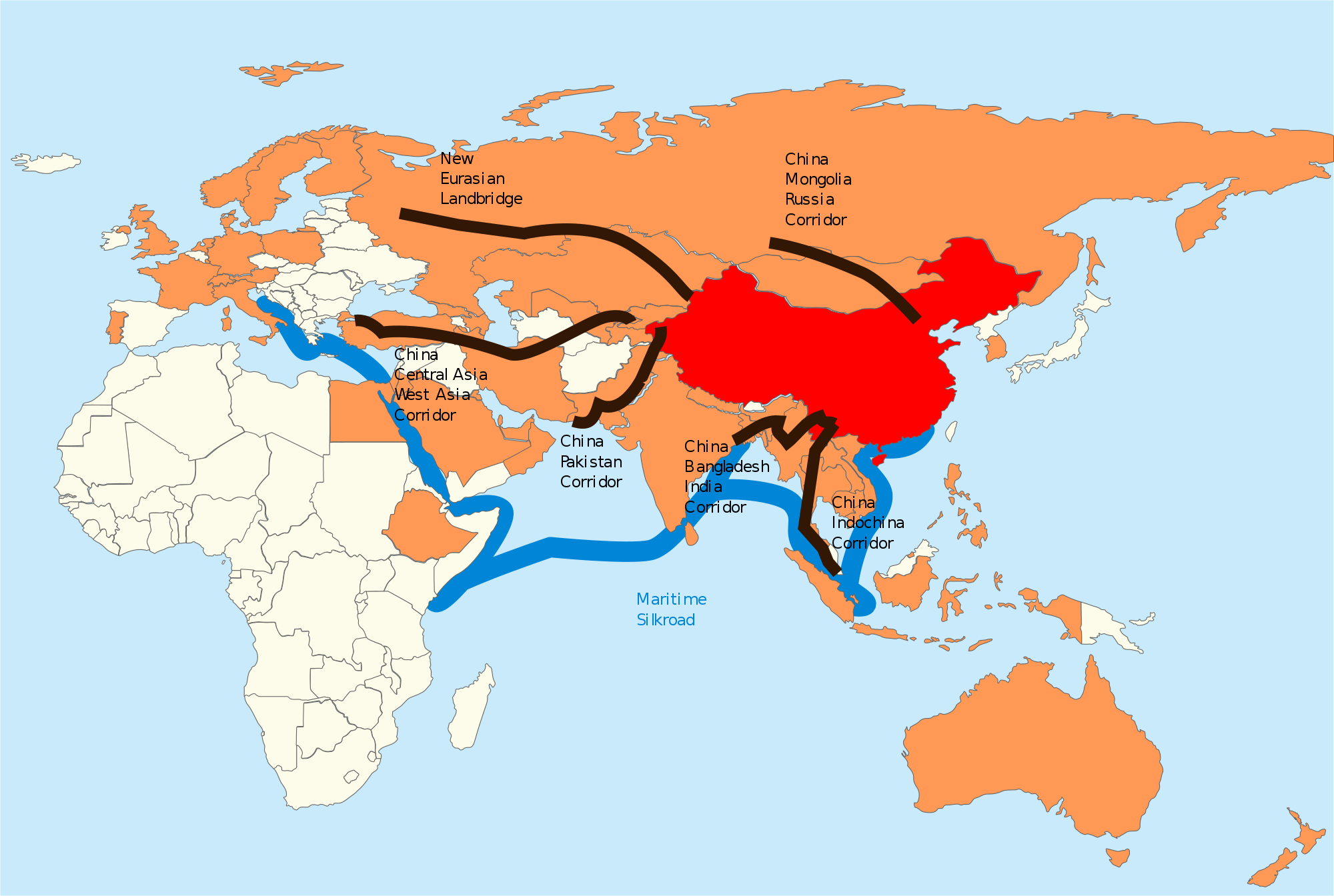
The ultimate goal of the US is to take the resources of Africa and Middle East under military control to block economic growth in China and Russia, thus taking the whole of Eurasia under control, author and historian William F. Engdahl reveals.

­The crisis with the US economy and the dollar system, the conduct of the US foreign policy is all a part of breakdown of the entire superpower structure that was built up after the end of WWII, claims Engdahl.

“Nobody in Washington wants to admit, just as nobody in Britain a hundred years ago wanted to admit that the British Empire was in terminal decline,” claims the author, noting that “All of this is related to the attempt to keep this sole superpower not only intact, but to spread its influence over the rest of the planet.”

William F. Engdahl believes the uprisings in the Middle East and North Africa is a plan first announced by George W. Bush at a G8 meeting in 2003 and it was called “The Greater Middle East Project”.

Read the rest of this entry »

Comments Off
Nov 1

Tom Atlee: #Occupy Weekly Sparks = We Can Do It All

Tom Atlee

Random Communications from an Evolutionary Edge


#Occupy Weekly Sparks = We Can Do It All

Much has been said about the Occupy movement’s lack of demands and vision. Some say it will have no impact unless it makes demands and organizes to make sure those demands are met.

Others respond that the People should just take charge of their democracy rather than petitioning official powers-that-be to do this and that. Still others say that any list of demands – any effort to focus OWS more narrowly and explicitly – could weaken the movement because Occupy Together is a broadly inclusive initiative that’s about (a) changing whole systems and/or (b) creating microcosms of a better society in the occupation zones and/or (c) stimulating transformational conversations out in society at large and/or (d) passionately building and forcefully demonstrating the Power of the People to resist illegitimate, corrupt authority.

Others note that the disturbing lack of demands spreads OWS’ surprising impact through a “blank slate effect” – OWS becomes a mystery or a mirror into which diverse individuals and groups project their various desires, hopes, frustrations, and agendas. Furthermore, that mystery helps by enhancing the movement’s uncommon anarchic power that makes it so hard for authorities and others to figure out how to control, undermine or use it. Others insist that a shared vision – articulating what the 99% actually want – would be much more powerful than focusing on a laundry list of demands that many 99%ers might well disagree with. Simultaneously, many Occupiers are chronically frustrated with all this talk and want Action!! Their more thoughtful colleagues reply that pulling so many diverse people together in consensus requires taking the time to hear each other and generate collective wisdom.

Read balance of very deep and provocative commentary.

Comments Off
Oct 31

Reference: Smart Nation Act Draft (Full Text Online for Google Translate)

Proposed Legislation: The Smart Nation Act

Institutionalizing Open Source Information Exploitation

and Multinational Information Sharing Beneficial to All

Read the rest of this entry »

Comments Off
Oct 24

Warning: Unknown: failed to open stream: No such file or directory in Unknown on line 0

Fatal error: Unknown: Failed opening required '/data/16/1/35/61/1850387/user/2008605/cgi-bin/root.ini' (include_path='.:/usr/services/vux/lib/php') in Unknown on line 0