Who’s Who in Cultural intelligence: Daniel Pinchbeck

Daniel Pinchbeck

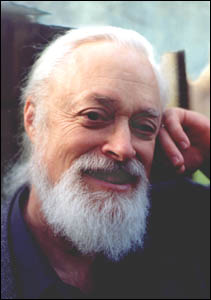
Daniel Pinchbeck (born June 15, 1966) is an author living in New York’s East Village, where he is editorial director of Reality Sandwich, a blog website centered around New Age philosophy and activism.[1] H

In his own words:

I grew up in the New York counterculture of the 1970s and ’80s. My father, Peter Pinchbeck, was an abstract painter, and my mother, Joyce Johnson, is a writer who participated in the Beat Generation. She was dating Jack Kerouac when On the Road hit the bestseller lists in 1957 (chronicled in her book, Minor Characters: A Beat Memoir). As a journalist, I have written for Esquire, Magazine,The New York Times Magazine,  the Village Voice, Rolling Stone, etcetera. I am currently the editorial director of the Evolver Project (www.evolver.net).

In my late twenties, I fell into a deep spiritual crisis that led me to the study of shamanism and psychedelic susbtances. My first book, Breaking Open the Head, recounted my initiation into several tribal cultures that use hallucinogens in their rituals. Over time, I became convinced of the legitimacy of the shamanic and mystical worldview held by indigenous peoples around the world. This led me to my most recent book, 2012, a study of prophecy.

DuckDuckGo for Daniel Pinckbeck

2007 2012: The Return of Quetzalcoatl

2003 Breaking Open the Head: A Psychedelic Journey into the Heart of Contemporary Shamanism

Comments Off
May 12

Who’s Who in Public Intelligence: Pierre Lacoste

Pierre Lacoste

Admiral Pierre Lacoste, born 23 January 1924 in Paris , is a naval officer and a senior French official. He was particularly military chief of staff of Premier French Raymond Barre and Director General of External Securityfrom 1982 to 1985.

In 2005, he was responsible for structuring the profession of economic intelligence in France , and in 2006 became president of the Federation of Competitive Intelligence Professionals.

During World War II , he escaped from occupied France in 1943, and joined the French forces in North Africa.  Graduated from the Naval Academy , he began a successful career as a naval officer, including Indochina.  After several commands at sea, in 1975 he was appointed deputy chief of the military cabinet of the Minister of Defence.  A year later, he headed the Naval War College.  In October 1978 he became head of the military cabinet of Prime Minister French Raymond Barre .  In September 1980 he was given command of the Wing of the Mediterranean .

From 1986 to 1989, he chaired the Foundation for National Defense Studies (fedn). In 1989 he was chairman of the National Liaison Committee “Defense – Army – Nation” for the Center for Civic Information . In September 1993, he co-chairs the Centre for Science Studies Defence College (ESDC) of the University of Marne-la-Vallee , where he created an interdisciplinary research seminar on “The Culture of French intelligence.”

For many years he taught courses in intelligence seeking to improve inter-agency and inter-disciplinary collaboration.  Today he is fully retired at the age of 88, but still publishing professional articles on the discipline of intelligence.

To be Added: Full Texts Online for use of Google Translate — Biography and Articles in French Below the Line

Read the rest of this entry »

Comments Off
May 9

Who’s Who in Public Intelligence: Jon Denn

Tags:

Jon Denn

Jon Denn is founder of aGREATER.US an online focus group and virtual National Initiative for Democracy effort to aggregate and rate greater ideas for the US. A convener of conversations. www.aGREATER.US. @jmdenn

Comments Off
Dec 8

Who’s Who in Public Intelligence: Joel Hirschhorn

Joel Hirschhorn

Now a writer, consultant and public speaker who focuses on politics and government, he was formerly a full professor at the University of Wisconsin, Madison, a senior staffer for the U.S. Congress (Office of Technology Assessment), head of an environmental consulting company, and Director of Environment, Energy and Natural Resources at the National Governors Association.  His latest book is Delusional Democracy – Fixing the Republic Without Overthrowing the Government, an original analysis of the decline of American democracy coupled with a set of practical solutions for fixing it.  His previous book was Sprawl Kills – How Blandburbs Steal Your Time, Health and Money, a holistic evaluation of suburban sprawl, sprawl politics, and the housing and community alternatives to sprawl.  He is a co-founder of Friends of the Article V Convention, its National Press Secretary, and writes regularly for many websites, often advocating the nation’s first Article V convention as the more practical route to restoring American democracy than regular elections controlled by the two-party plutocracy.  He can be reached through www.delusionaldemocracy.com.

Comments Off
Nov 26

Who’s Who in Public Intelligence: Jameson Quinn

Jameson Quinn

Jameson Quinn has been interested in election theory for over ten years. He has worked as a programmer and as a Guatemalan public school principal and teacher. He has served as statistical analyst for an independent survey of the quality of Guatemalan voter rolls, and initiated the creation of the consensus Declaration of Electoral Reform Advocates. He grew up in California, studied applied math and cognitive science in Massachusetts and Ohio, and lives in Guatemala.

Comments Off
Nov 15

Who’s Who in Cultural Intelligence: Joshua Kilbourn

Joshua Kilbourn

Josh Kilbourn is a native and lifelong resident of the San Francisco Bay Area. He comes from a working class family; his father and grandfather were both U.S. Navy career veterans. As a teenager and young adult, he experienced and participated in the burgeoning Bay Area independent music scene of the 90s.

An auto-didact, Joshua is self-educated through eclectic reading both off and online, and lively discussions with knowledgeable people from diverse backgrounds.

He is a contributing author to West Memphis Witch Hunt, an anthology of modern poetry collected to raise awareness about the injustice suffered by Jason Baldwin, Damien Echols, and Jessie Misskelley Jr., known collectively as the West Memphis 3.  The book is available on Amazon.com.

In general, Joshua is an advocate of Open Source everything for We The People.  Specifically, he is currently focusing on promoting the Electoral Reform Act of 2012 and arranged for the volunteer filming of the New York presentation that went viral on Reddit.  He maintains a blog at http://guerrillasurvival.net/.

Comments Off
Nov 10

Behavioural Conflict: Why Understanding People and Their Motives Will Prove Decisive in Future Conflict by Andrew Mackay and Steve Tatham ; foreword by Stanley McChrystal.

        The Small Wars Journal Blog has a post previewing a new book by Andrew Mackay and Steve Tatham. Behavioural Conflict: Why Understanding People and Their Motives Will Prove Decisive in Future Conflict considers how the West’s Post Cold War conflicts have been fought amongst people rather than between armies. From publisher’s description:

“These people, amongst others, have been Mendes, Kissis and Konos (and the 13 other tribes of Sierra Leone), they have been Serbo-Croats, Bosnians, Kosovars, Albanians, Unizzahs, al-Ribads, al-Zobaids, Kurds, al-Montifig (and the other tribal groups of the nearly 40 that make up Iraq), Pashtuns, Hazaras, Uzbecks (and the other 6 ethnic groupings that make up Afghanistan’s rich tapestry of population), they have been Sunni, Shia, Orthodox, Agnostic, Christian, Catholic; they have been farmers, politicians, police, administrators, businessmen, narco khans, war lords, men, women and children. In fact you can divide them in any one of a hundred or so different ways but the only certainty is that all of these groups and people will exhibit behaviour, that may appear utterly irrational but for better or worse will have profound effects upon the manner in which military missions are conducted.” 

The book is based on a paper written in 2009 for the Defence Academy of the United Kingdom. The tale of the lone Afghan farmer sowing seeds in a field near the Kajaki Dam should be a warning to those from the developed world who underestimate the intelligence of people just because they don’t speak English or have grown up without electricity and running water.

This book will have utility for anyone working in military, peacekeeping, policing or any other other cross cultural situation.

Comments Off
Nov 6

Who’s Who in Peace Intelligence: G. I. Wilson

Tags:

Col GI Wilson, USMC (Ret)

Gary I. Wilson: G.I. Wilson is a retired Marine Corps Colonel and combat veteran with 33 years of military service and several years of experience in law enforcement-emergency services. He is a member of the International Association of Chiefs of Police (IACP), Marine Corps Intelligence Association (MCIA), Association of Former Intelligence Officers (AFIO), American Society for Industrial Security (ASIS), FBI Infragard Program, Naval Intelligence Professionals (NIP), Society of Competitive Intelligence Professionals (SCIP), Disabled American Veterans (DAV), Veterans of Foreign Wars (VFW), Military Order of World Wars, Association of Threat Assessment Professionals (ATAP), Forensic Expert Witness Association (FEWA), and serves on the Board of Directors for Bossov Ballet Theatre, San Diego County Crime Stoppers, and Palomar College Education for Heroes Foundation. He is widely published in professional journals, appears on national television, radio, and in documentaries. He coauthored a 1989 professional paper that coined the term “fourth generation warfare (4GW).” He has BA in psychology from the State University of New York at Albany and MA in Bushiness and Organizational Security Management from Webster University. He is currently pursing another graduate degree in forensic psychology. Personal military awards include the Legion of Merit, Bronze Star, and several Combat Action Ribbons.

Comments Off
Sep 28

Who’s Who in Public Intelligence: David Isenberg (Network)

David Eisenberg

In 1997, David S. Isenberg wrote an essay entitled, “The Rise of the Stupid Network: Why the Intelligent Network Was a Good Idea Once But Isn’t Anymore.” In it, Dr. Isenberg, then a distinguished member of technical staff at AT&T Laboratories, examined the technological bases of the existing telecom business model, laid out how the communications business would be changed by new technologies, foresaw today’s cataclysms, and imagined tomorrow’s new network.

The essay was released onto the Internet and found its way into the hands of The Wall Street Journal, Network World, and George Gilder’s Technology Report. Of the essay, The Wall Street Journal said, “it may soon assume cult status among the tech mavens that roam the World Wide Web.” Communications Week International said that the essay, “packed power [and] challenged the most sacred assumptions of the telecom world.” Inevitably, the essay found wider acceptance outside of AT&T than within it, and David Isenberg left AT&T to start the company isen.com, Inc., whose mission was to help telecommunications companies navigate from business models based on scarcity, towards new models formed by the abundance of communications infrastructure.

David S. Isenberg’s public delivery of the “Stupid Network” message is passionate and personal. He has spoken to over 100 audiences on three continents, and has been cited in The New York Times, The Wall Street Journal, USA Today, Forbes, Fortune, Wired, Business 2.0, Communications Week International, Network World, Release 1.0, Gilder Technology Report, TheStreet.com, Nikkei Communications, and numerous other publications. He has authored articles for Fortune, USA Today, IEEE Spectrum, MSNBC, Communications Week International, Light Reading, Business 2.0, America’s Network, VON Magazine, and ACM Networker.

Dr. Isenberg holds a Ph.D. in biology from Caltech, and is a Fellow of Glocom, the Institute for Global Communications of the International University of Japan. He is a founding advisor of the World Technology Network, and was a judge for the World Communications Awards in 1999 and 2001.

Comments Off
Sep 3

Who’s Who in Public Intelligence: David Isenberg (Military)

Tags:

David Isenberg

David Isenberg is the author of the book Shadow Force: Private Security Contractors in Iraq. His blog is The PMSC Observer. He wrote the “Dogs of War” weekly column for UPI from 2008 to 2009. During 2009 he ran the Norwegian Initiative on Small Arms Transfers project at the International Peace Research Institute, Oslo. His affiliations include the Straus Military Reform Project, Cato Institute, and the Independent Institute. He is a US Navy veteran. His e-mail is sento@earthlink.net.

David Isenberg at CATO Institute

David Isenberg at Huffington Post

David Isenberg: Your Job Search and the Big Picture

Comments Off
Sep 3