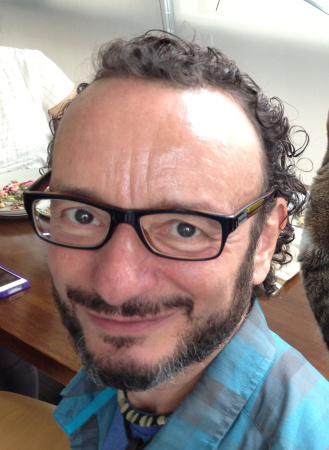
Berto Jongman & Jan Rappoport: Question Authority? You Must Be Crazy.

Berto Jongman

Berto Jongman

In the Dutch media there wqs a discussion today about an opinion poll about support for conspiracy theories organized by a Dutch university research group. The researchers used the same arguments as in the NYT piece. If you ask sensible questions and don’t believe the official narrative you must be crazy and have low self worth.

Why Rational People Buy Into Conspiracy Theories

MAGGIE KOERTH-BAKER

New York Times, May 21, 2013

Phi Beta Iota:  The only useful part of the NYT article is this first comment by a sane person:

  • Pat  Nyack, NY. Part of the conspiracy cohort is made up of those of us who grew up during Watergate; the lies told about the number of enemy deaths during the Viet Nam war; the actions of major corporations in places like Chile in the 70′s and 80′s. Some of us stood in public spaces in the heart of our universities with the guns of the National Guard trained on us. These were all factual happenings, many uncovered and reported on by this very paper. Our childhood was built upon the illusion that America was mostly just a large Mayberry. These revelations shook our basic beliefs right to the ground.  It’s hard to step back from that cliff once you’ve been pushed to the edge of it.
Jon Rappoport

Jon Rappoport

Authorities Never Have “Issues with Authority”

May 21, 2013

www.nomorefakenews.com

It’s simple. Authorities invented the idea that other people have issues with authority.

Psychiatrists rank right up there among the elitists setting the standards. They, for example, have concocted a little fictional doodad called Oppositional Defiance Disorder. And magically, they never accuse their professional colleagues of having it. No.

Why should they? They amuse themselves by deciding when civilians are overly defiant and need pacification (drugs).

But we’re also talking about character structure here, because psychiatrists turn out to be exactly the people who want to slap labels like ODD on others. They like that. So they labor in universities and hospitals and earn their degrees and state-issued licenses, knowing that soon they will have that power.

Having gained it, there is nothing to be defiant about. They’re sitting on top of the heap, which they call science.

It’s quite a racket.

Full post below the line — both humorous and frightening.

Read the rest of this entry »

Comments Off
May 21

Tom Atlee: Doing Democracy Differently

Tom Atlee

Tom Atlee

Doing democracy differently

In Is Democracy in Trouble? E.J. Dionne describes major studies suggesting that “Across most of the democratic world, there is an impatience bordering on exhaustion with electoral systems and political classes” because governments don’t follow the will of “the people”.

It would be one thing if governments made wiser decisions than what “the people” want. But they so seldom do. Usually they make decisions that favor special interests regardless of the common good.

It saddens me that this is framed as people losing faith in democracy. I don’t think governments that act this way are good examples of democracy. I’m also not sure that such a system can be fixed within a corrupted democratic process.

There are other ways to do democracy. Most people don’t realize that ancient Athenians – our alleged democratic forebears – were radically in favor of random selection and opposed to voting for representatives. They figured that aristocrats would dominate any electoral system. (Sound familiar?) Aristotle summarized their view, saying “It is accepted as democratic when public offices are allocated by lot [random selection]; and as oligarchic when they are filled by election.”

Although John Adams and James Madison (the first and fourth US Presidents) may not have been aware of the use of random selection in democracy, they did make statements that sound like it. Adams said that a legislature “should be an exact portrait, in miniature, of the people at large, as it should think, feel, reason, and act like them.” And Madison added that “The government ought to possess… the mind or sense of the people at large. The legislature ought to be the most exact transcript of the whole society.”

Read the rest of this entry »

Comments Off
May 21

Howard Rheingold: 19 June – 26 July Think-Know Tools Webinar

Categories: Culture,Knowledge
Howard Rheingold

Howard Rheingold

I’m offering Think-Know Tools again June 19 -July 26. All the details about what we’ll co-learn, the schedule, missions, how we go about participative and collaborative learning, can be found at http://socialmediaclassroom.com/host/think2/  Price is $300 via PayPal. $250 if you’ve taken a Rheingold U course before ($200 if you’ve taken two courses, etc.). $500 if your company reimburses.

It’s all about the theory and practice of personal knowledge management. We’ll look at the theory and conceptual frameworks around intellect augmentation and the extended mind. We’ll also actively practice social bookmarking as a collective intelligence activity, concept mapping, and building knowledge-plexes with Personal Brain (you can see the web-brain version of the syllabus at http://webbrain.com/brainpage/brain/EB72D74A-199F-8994-4938-88ACDA8049EF )

Feel free to contact me about questions. Participation is limited to 30 co-learners, so let me know soon if you want me to reserve a place for you.

Please feel free to forward to anyone who might be interested.

Regards,

Howard Rheingold
http://www.rheingold.com
what it is —> is —>up to us

Comments Off
May 21

Neal Rauhauser: Professionalism & Propaganda

Neal Rauhauser

Neal Rauhauser

Professionalism & Propaganda

One of the things I have done over the last six months has involved identifying and observing hive mind constructs in the real world. This happened in the context of examining the publicly visible process of foreign policy making. I wrote thirty three posts that are at least tangentially related to this pursuit. Hive mind constructs will eventually win out over point source propaganda, but it won’t be pretty to watch.

. . . . . . . . .

Links and short descriptions of various sequential endeavors and their findings

. . . . . . . . .

CONCLUSION:

Monolithic corporate forces heavily invested in the status quo are wrestling with networked humans and finding they face a sort of memetic Devil’s Snare. Their struggles may seem to be momentarily successful, but they are only educating their opponent as to their strengths and weaknesses.

The concept of the corporation didn’t really take off until the Catholic church relaxed usury laws three centuries ago. Compound interest depends on exponential growth and humans have pretty much hit the wall in terms of what our environment will support. Any one of climate change or peak oil could undo the perception that we are all consumers living in a conglomeration of free markets. Those two have arrived pretty much simultaneous with a financial sector meltdown and we are entering a period where our society will wind down to the Earth’s solar maximum. A value system based on exponential growth will not survive a disproof by counter example, and Mother Nature responds to neither paper injunctions nor heartfelt supplications.

Some of those networked humans are starting to realize that they need not tear down the corporatocracy by hand and they are already thinking about how and what to preserve. What role does a hive mind play in this? What role can it play when electrical power is intermittent and the supply chains needed for electronic devices are interrupted?

Read full post, see all linked posts with graphics.

Comments Off
May 12

David Isenberg: Nurture Your Givers to Increase Effectiveness

Tags:
David Isenberg

David Isenberg

Givers take all: The hidden dimension of corporate culture

By encouraging employees to both seek and provide help, rewarding givers, and screening out takers, companies can reap significant and lasting benefits.

McKinsey & Company, April 2013

After the tragic events of 9/11, a team of Harvard psychologists quietly “invaded” the US intelligence system. The team, led by Richard Hackman, wanted to determine what makes intelligence units effective. By surveying, interviewing, and observing hundreds of analysts across 64 different intelligence groups, the researchers ranked those units from best to worst.

Then they identified what they thought was a comprehensive list of factors that drive a unit’s effectiveness—only to discover, after parsing the data, that the most important factor wasn’t on their list. The critical factor wasn’t having stable team membership and the right number of people. It wasn’t having a vision that is clear, challenging, and meaningful. Nor was it well-defined roles and responsibilities; appropriate rewards, recognition, and resources; or strong leadership.

Rather, the single strongest predictor of group effectiveness was the amount of help that analysts gave to each other. In the highest-performing teams, analysts invested extensive time and energy in coaching, teaching, and consulting with their colleagues. These contributions helped analysts question their own assumptions, fill gaps in their knowledge, gain access to novel perspectives, and recognize patterns in seemingly disconnected threads of information. In the lowest-rated units, analysts exchanged little help and struggled to make sense of tangled webs of data. Just knowing the amount of help-giving that occurred allowed the Harvard researchers to predict the effectiveness rank of nearly every unit accurately.

The importance of helping-behavior for organizational effectiveness stretches far beyond intelligence work. Evidence from studies led by Indiana University’s Philip Podsakoff demonstrates that the frequency with which employees help one another predicts sales revenues in pharmaceutical units and retail stores; profits, costs, and customer service in banks; creativity in consulting and engineering firms; productivity in paper mills; and revenues, operating efficiency, customer satisfaction, and performance quality in restaurants.

Read full article.

Comments Off
May 10

Jean Lievens: Home Swaps and Other Sharing Value Networks

Jean Lievens

Jean Lievens

The Sharing Economy is Exploding: Knok’s 7 Key Factors Why Home Swap is the Perfect Example of a Sharing Service

Knok, the fastest growing home exchange community, shows that house swapping is the perfect example of collaborative consumption.

(PRWEB) May 08, 2013

This year has seen the consolidation of the sharing economy and several conferences around this theme confirm it. In April, 150 sharing economy leaders joined author and organizer Lisa Gansky in San Francisco for Let’s Mesh. In May, the OuiShareFest in Paris brought together over 500 people from all over Europe, and in June, the sharing economy is Le Web’s theme for its London event.

After the output of these events and the discussions on the future of the sharing economy with practitioners around the world, Knok has created a list of the 7 most relevant reasons why home exchange is a great example of a collaborative consumption business:

Read the rest of this entry »

Comments Off
May 10

Jean Lievens: Social Media and Culture — We Are All Digital Immigrants

Categories: Culture
Jean Lievens

Jean Lievens

We Are All Digital Immigrants

Does technological progress change the human condition? Techno-sociologist Zeynep Tufekci took the time to speak with Martin Eiermann about the rise of Al Jazeera, accelerating change and the conventions of online interaction.

Zeynep Tufekci is an American sociologist, assistant professor at the University of North Carolina and a fellow at the Berkman Center at Harvard University. Her research focuses on the intersection of technology and culture. Follow her on Twitter at @techsoc.

EXTRACTS:

Tufekci: The question about causality is not very fruitful when framed as an either/or. First, “online” is part of the real world. What the online does is reconfigure and augment the “offline” to open up new spaces and to allow new forms of connectivity, coordination and collaboration. Second, revolutions are always multi-causal.

. . . . . . . . .

Read the rest of this entry »

Comments Off
May 7

Theophillis Goodyear: Time for an Open-Source Truth Blitz on CNN and the Boston Bombing Story — Calling All Bloggers — Kick the Crap Out of CNN, Fox Et Al on Boston NOW — May the Force Be With You!

Theophillis Goodyear

Theophillis Goodyear

This is a response to Owl’s post Owl: Public Awake, Major Media Shredded — the Revolution IS Being Televised!

CNN is having ratings problems. If their subterfuge in Boston becomes common knowledge they will loose credibility and even more viewers. It would be a shot fired across the bow of every other news network. All the prominent muck-raking journals, like Mother Jones, the Nation, etc., should work together and make it happen, just like a blitz in football where everyone goes after the quarterback at once. They’re already doing it, but they need to hit CNN hard, gang up on them! It may be a long time before there’s another golden opportunity like this. CNN is down right now. With a behemoth like that, this is the best time to kick the crap out of them. And there’s no mistaking the fact that they deserve it and in fact are inviting it by their repeated breaches of journalistic ethics. If the shoe was on the other foot they would be kicking the crap out of the little guy. It goes with the territory. They knew the rules when they started playing the game. The bigger they are the harder they fall.

Read the rest of this entry »

Comments Off
Apr 25

Owl: Public Awake, Major Media Shredded — the Revolution IS Being Televised!

Who?  Who?

Who? Who?

Blogger Jon Rappoport offers penetrating insight into the on-going implosion of image-based mass media, and it’s good news for truth (emphasis mine):

“Television news is shriveling. And it’s under attack from a new breed. You can call them counter-programmers, video freaks, whatever.  But they’re winning. Every dollar and inch of technology the networks employ move toward an irrefutable image on the screen. “Here it is. Look.”  And counter-programmers say, “Look again. See those guys in the yellow jackets standing right near the bomb when it goes off? They don’t move at all. They’re fine.” There is something very powerful in that response, because people are addicted to images. When the image you’re watching blows up, because somebody forces you to see something new, you start to wake up and effect a cure, even if you don’t want to. Image-addiction is sacred to people…

Read the rest of this entry »

Comments Off
Apr 25

Theophillis Goodyear: Alan Nordstrom on What Wisdom Requires

Categories: Culture,Ethics
Theophillis Goodyear

Theophillis Goodyear

A very concise and salient, 213 word essay on wisdom, by Alan Nordstrom:

What Wisdom Requires

eight high points:

1. regulate our behavior sanely and rationally

2. comprehend the consequences of our decisions and customs

3. practice kindness toward others who are similarly struggling to thrive

4. practice humane behavior and transcend the brute instinct to conquer and dominate

5. act according to the principle of kinship and reciprocity: treat others as one wishes to be treated

6. act according to the principle of cooperation and partnership rather than conquest

7. cultivate the higher-order intellectual potential that human beings possess

8. manifest truth, beauty, and goodness

Comments Off
Apr 25