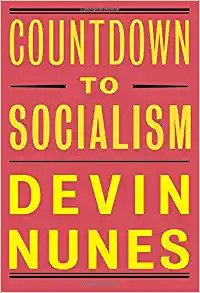
Review: Anyone That Works for a Living and Votes Republican is an Idiot

Amazon Page

Clyde Coughenour

5.0 out of 5 stars Alternative Perspective, Very Naive on US Reality, January 30, 2012

I *like* this book. I’ve been running for the Reform Party nomination for President (there were three of us, now there are two, and I might drop out soon if I get a federal job and the Hatch Act kicks in). I mention that mostly to emphasize that everything I have learned in the six weeks I’ve been registered with the Federal Elections Commission (FEC ID C00507756) is relevant to the second half of my review. This book came to my attention via a press clipping service that helps me follow any mention of a third party — this book calls for a new third party Of, By, and For Workers — we used to call that Communism (just kidding), but seriously, the last part of my review is a pitch for what workers should do if they really want to take charge, as workers finally did in Norway and Sweden (it took them 25 years).

I would normally rate this book at four stars, there is a lot missing, but I have to say that in terms of earnest honest patriotic down-to-earth common sense and indisputable pro-labor attitudes, this book is solid, so I am putting it at five stars and linking below to some books that add the missing “weight” to this read. My reviews of all of the books I list are summary in nature, to help those with little time or little money.

The book is scattered, providing snapshots of all of the issues, showing very clearly where neither party, but especially the Republicans, can be trusted to look out for workers. Politics is theater–nothing is decided in the open, the real deals are behind closed doors and the taxpayer ALWAYS loses. I certainly give the book high marks for distilling a very complicated corrupt mess into a simplified structure, and I totally agree with the author that there are no reliable statistics from the government or corporations, but let me give you three that matter:

Read the rest of this entry »

Comments Off
Jan 30

Review: Britain’s Empire – Resistance, Repression and Revolt

Tags:

Amazon Page

Richard Gott

5.0 out of 5 stars Preliminary Review: Understanding the Trade-Offs & True Cost of Empire,December 8, 2011

I have ordered this book and am very much looking forward to providing readers (and myself, this is how I keep notes) with one of my more detailed reviews. The publisher is to be scolded for not using Inside the Book, one of Amazon’s best features, and for failing to provide the best possible use of the Book Description and Editorial Reviews section. While the existing review is good and I have voted for it, it does not do this book justice. My decision to buy was based on the easily found review in The Guardian (UK) by Richard Drayton, “Britain’s Empire: Resistance, Repression, and Revolt by Richard Gott — review,” published 7 December 2011.

Where I am going to go with my review is toward an in-depth articulation of what has never been done before that I know of, an examination of the trade-offs of Empire and the opportunity costs of Epoch A hierarchical “rule by secrecy.” I have reviewed many books on Empire, Class War, Elite Rule, all easily found in master list online, Worth a Look: Book Review Lists (Negative). I also recommend the observe, Worth a Look: Book Review Lists (Positive).

Russell Ackoff would say that Empire represents centuries of doing the wrong thing righter–and at greater expense across the political-legal, socio-economic, ideo-cultural, techno-demographic, and natural-geographic domains. As we approach the Mayan calendar’s start date for Epoch B, 12 December 2012, many of us are conscious that we must abandon old ways and rethink how we organize society. Occupy is a sympton of this – organized people against organized money, organized consciousness against organized violence.

Read the rest of this entry »

Comments Off
Dec 8

Review: The KunstlerCast – Conversations with James Howard Kunstler

Amazon Page

Duncan Crary, James Howard Kunstler

5.0 out of 5 stars Unique in Its Own Right, NOT a Substitute for Long Emergency,November 20, 2011

THIS IS AN OCCUPY BOOK. It illuminates legitimate grievances being talked about by Occupy.

First, having read The Long Emergency: Surviving the End of Oil, Climate Change, and Other Converging Catastrophes of the Twenty-First Century, I urge anyone interested in this book to buy both. They are completely different. This book is not a substitute for the first book.

Second, although the “author” Duncan Crary takes great pains to minimize his role, I have dealt with massive transcripts and historical artifacts covering long spans and would say that he has done a heroic job–he has excelled–at pulling out “just enough, just right” pieces and ordering them into the following section (since Look Inside the Book is not available, I list them):

Read the rest of this entry »

Comments Off
Nov 20

Review: Who’s To Say What’s Obscene – Politics, Culture, and Comedy in America Today

Tags:

Amazon Page

Paul Krassner

5.0 out of 5 stars Less Funny, More Provocative–Price is a WOW,November 20, 2011

First, a confession. I am 59 years old and had no idea who Paul Krassner was/is. The more I read through the book the more I marveled at his pioneering endeavors and their continuing relevance as Occupy struggles to find its voice and focus. So for all the folks that don’t know who Paul Krassner is, at under $3.00 this book is a WOW value, and I recommend it for that alone.

This is NOT a funny book. There are a few places here and there where one can see the deep tragic comedy possibility, but more than anything this is a very provocative book that beats a single theme: the obscenity of all that we allow to be done in our name, to our bodies and our environment, to our families, schools, economy, and the Republic itself. Obscene, they name is a two-party tyranny and a Congress so corrupt they shame every dictator (all 40+ of them, all but two “best pals” of the US Government) in their craven greed and lack of democratic integrity.

Read the rest of this entry »

Comments Off
Nov 20

Review: This Changes Everything

Tags:

Amazon Page

Sarah van Geider et al.

4.0 out of 5 stars Annoying, But Recommended,November 18, 2011

As someone who has been following the Occupy movement since 17 September, and whose informal video (done by someone else) went viral from the front page of Reddit, I have a deep–very deep–interest in seeing Occupy achieve tangible results. I have intimately engaged with both the plethora of “demands” and the internal divisions among everyone from the anarchists to the free-riders.

This book is annoying because it is just a bit too slick and opportunistic for my taste. Use Inside the Book to see what you are getting. It is priced very reasonably (and cheaper if bought directly from YES Magazine) and it certainly deserves to be in any library intent on capturing as much about the Occupy movement as possible, but this is not a world-changing book nor does it actually help Occupy get anywhere specific.

In fairness, though, consider visiting the YES book sale site for paragraphs on each of the ten ways YES believes Occupy has changed everything; I will only list the ten blurbs without debating their merits.

Read the rest of this entry »

Comments Off
Nov 18

Review: What Comes After Money?

Amazon Page

Daniel Pinchbeck and Ken Jordan (eds.)

5.0 out of 5 stars Forward-Thinking, Relevant to #OWS, Brilliant Sparks, October 22, 2011

This book is one of at least four that I would suggest are essential reading for any citizen in the aftermath of #OccupyWallStreet (now shortened to #OWS). The other three are:

Extreme Democracy
The Innovator’s Manifesto: Deliberate Disruption for Transformational Growth
Sacred Economics: Money, Gift, and Society in the Age of Transition

This book is a spin-off from Reality Sandwich, an online creative blog founded by one of the contributing editors of this book. Billed as evolving consciousness one bite by bite, it offers a melange of forward thinking. Since I am a book person by nature (a digital immigrant), I particularly appreciate “best of the best” rendered in a value-added book form.

Twenty-two contributors focus on transforming currency and community with consciousness being the implicit third leg of the stool.

Everything here was written well in advance of #OWS, but as with the other three books I recommended above, could easily be adopted by #OWS as its own.

Read the rest of this entry »

Comments Off
Oct 22

Review: Extreme Democracy

Amazon Page

Mitch Ratcliffe, Jon Lebkowsky

5.0 out of 5 stars SIX STAR #OWS Primer Wow Wow Wow,October 20, 2011

I bought this book in October 2010 because I was getting to know both Mitch Ratcliff and Jon Lebkowsky better, but at first pass through it did not really draw me in. Then OccupyWallStreet happened. I read the book on the flight from the US to Spain where I am talking about commercial intelligence and integrity in the messed up new world, and this time around, the book grabbed me.

Because #OWS has brought to life the ideas the co-editors and various contributing authors understood well before 2004 and articulated in 2004, now I can absorb this book as much more meaningful and inspirational. Anyone associated with OccupyWallStreet in any way from direct to indirect, should read this book. I am donating my copy to the George Mason University Library as I do all my new books (they took over my entire library when I joined the UN back in 2010).

Read the rest of this entry »

Comments Off
Oct 20

Review (Guest): The Conquest of Violence – The Gandhian Philosophy of Conflict

Tags:

Amazon Page

Joan Valerie Bondurant

5.0 out of 5 stars Every One on Earth Should Read This Book!,August 12, 2009

This could quite well be the best book ever written about Gandhi’s philosophy of conflict: satyagraha. Bondruant’s book is systematic and thorough. She lived in India for years and even got a chance to interview Nehru and many of Gandhi’s other colleagues about the nonviolent action they were mutually involved with, which eventually brought about Indian Independence. This book was first written either in 1953 or 1958. But this edition was revised in 1988 and includes new, important commentary and afterthought by the author.

The book is everything the other reviewer said, and more. Because the author takes such a systematic approach, I can’t imagine a better introduction to Gandhi’s philosophy of conflict. But the truly unique and most vitally important aspect of this book, in my opinion, is due to the author’s orientation. Her field is political science. She was a researcher who held a high position at the University of California at Berkeley. And she claims that Gandhi’s philosophy made a contribution to political science that no system of political theory has ever adequately dealt with before. In that sense, she says, that Gandhi’s greatest contribution to the world may have been overlooked. And this, I think, is what makes this book one of the most important books of the 20th century.
Read the rest of this entry »

Comments Off
Oct 18

Review (Guest): American Nations – A History of the Eleven Rival Regional Cultures of North America

Tags:

Amazon Page

Colin Woodard

Phi Beta Iota:  Elevated to four stars on recommendation of Chuck Spinney.  Synopsis of book in article for:  A Geography Lesson for the Tea Party

3.0 out of 5 stars How many sub-nations compose the USA?,October 10, 2011

Many people think of the United States as a nation with two regional or sub-national entities — the North and the South. The two sub-nations have identifiable differences in outlook. The South, a traditionally rural and agricultural region, has always been perceived to have a relatively conservative and individualistic outlook, oriented toward small government and states rights. The North, dominated by urbanized commercial centers, has always been relatively more aligned with big government agendas, a natural characteristic of densely populated areas where most people’s livelihoods are derived from industry and commerce.

The geographical, political, and cultural divides between the North and South have been fairly well defined by the “Mason-Dixon Line” — approximately the line of the Ohio and Potomac Rivers . Indeed states like Kentucky and Maryland are called “Border States” as if they were on an international frontier. And of course a military frontier DID materialize between the North and South when the Southern sub-nation attempted to assert its sovereignty during the Civil War.

This great divide between the Northern and Southern sub-nations continues to this day. I’ve read commentaries from foreigners who explain the politics of the United States as consisting of a struggle for dominance between the Northern and Southern sub-nations. We Americans refer to this as the “Red State / Blue State” divide. So the idea of the USA consisting of two sub-nations is well established.

The question this book addresses is whether it makes sense to subdivide the United States into MORE THAN TWO subnational entities. Others have asked this question before. Joel Garreau wrote about it in 1981 in his book THE NINE NATIONS OF NORTH AMERICA. I read NINE NATIONS then and concluded that it was partially valid in an economic sense, i.e. relatively more Westerners earn their livelihoods from mining, relatively more people on the Great Plains earn their living from growing wheat and corn and livestock, and relatively more Northerners earn their living from Industry. So from that perspective there are arguably nine economic nations in North America. But Garreau did not convince me that there are more than two political sub-nations inside the USA.

Read the rest of this entry »

Comments Off
Oct 18

Review (Guest): Democracy Incorporated – Managed Democracy and the Specter of Inverted Totalitarianism

Tags:

Amazon Page

Sheldon S. Wolin

Editorial Review:

Of the many books I’ve read or skimmed in the past seven years that attempted to get inside the social and political debacles of the present, none has had the chilling clarity and historical discernment of Sheldon S. Wolin’s Democracy Incorporated. Building on his fifty years as a political theorist and proponent of radical democracy, Wolin here extends his concern with the extinguishing of the political and its replacement by fraudulent simulations of democratic process. — Jonathan Crary, Artforum

4.0 out of 5 stars Managed Democracy, Superpower, and alas, even, “Inverted Totalitarianism”, June 17, 2008

ByJohn P. Jones III (Albuquerque, NM, USA) – See all my reviews  (VINE VOICE)    (TOP 500 REVIEWER)    (REAL NAME)

This is a seminal work which “tells it like it is” concerning the current power arrangements in the American political system, as well as the political leadership’s aspirations towards global empire. Prof. Wolin sets the tone of his work on page 1, with the juxtaposition of the imagery of Adolph Hitler landing in a small plane at the 1934 rally at Nuremberg, as shown in Leni Reifenstahl’s “Triumph of the Will,” and George Bush landing on the aircraft carrier “Abraham Lincoln” in 2003. Certainly one of the dominant themes of the book is comparing the operating power structure in the United States with various totalitarian regimes of the past: Stalinist Russia, Nazi Germany and Fascist Italy. Prof Wolin emphasizes the differences between these totalitarian powers, and the softer concentration of power in the United States, which he dubs “inverted totalitarianism.”

Read the rest of this entry »

Comments Off
Oct 7

Warning: Unknown: failed to open stream: No such file or directory in Unknown on line 0

Fatal error: Unknown: Failed opening required '/data/16/1/35/61/1850387/user/2008605/cgi-bin/root.ini' (include_path='.:/usr/services/vux/lib/php') in Unknown on line 0