5.0 out of 5 stars6 Star Collective Common Sense Relevant to CYBER-Commons Not Just Earth Commons, May 27, 2014
I read this book shortly after I had read Stop, Thief!: The Commons, Enclosures, and Resistance (Spectre) and my first impression is that the book should be re-issued in 2015, a quarter-century after it was first published, with additional material on how everything here is applicable to governing the cyber-commons. I have to recommend the two books together — STOP THIEF lays down with deep historical and multi-cultural foundation that gives GOVERNING THE COMMONS even more credibility — and for those that do not realize, this book earned the author a Nobel Prize in Economics.
On that note, I would point out that this book crushes the traditional explanations for why the state or the firm are superior decision-making alternatives to bottom-up citizen common sense. This book is also consistent with the LOSING proposal to the Club of Rome that recommended we focus on educating the global public (a universal bottom-up approach). As well now know, the Club of Rome chose the wrong solution, Limits to Growth: The 30-Year Update, because is assumed that top-down mandated measures were the only measures that could be effective.
The Open-Source Everything Manifesto is a distillation of author, strategist, analyst, and reformer Robert David Steele life's work: the transition from top-down secret command and control to a world of bottom-up, consensual, collective decision-making as a means to solve the major crises facing our world today.
The book is intended to be a catalyst for citizen dialog and deliberation, and for inspiring the continued evolution of a nation in which all citizens realize our shared aspiration of direct democracy—informed participatory democracy. Open-Source Everything is a cultural and philosophical concept that is essential to creating a prosperous world at peace, a world that works for one hundred percent of humanity.
The future of intelligence is not secret, not federal, and not expensive. It is about transparency, truth, and trust among our local to global collective. Only “open” is scalable.
As we strive to recover from the closed world corruption and secrecy that has enabled massive fraud within governments, banks, corporations, and even non-profits and universities, this timely book is a manifesto for liberation—not just open technology, but open everything.
Our Review
The term Open Source refers to universal access to a product or services core design or primary features. Without Open Source there would be no Internet in the way that we currently enjoy it for it is in digital publishing and information sharing that Open Source has been such a powerful force for change.
In this book, the author, drawing extensively on his intelligence and military background, has cleanly written an easy to follow book, that outlines a careful course of action for developing a new kind of global information sharing infrastructure. To be headquartered at the UN, this new infrastructure would make it possible for every organization (and through them, everyone) on the globe to share open-source intelligence equally as a free public resource. If it is successful, this new global brain could transform our world from its current insecurity-driven and corrupt corporate dominated lose-lose, economic and conflict trap, into a much revived win-win strategy for bottom-up collective survival in a peaceful and sustainable world economy.
At least that is the theoretical hope and vision. On paper, and in principle, it is a stunningly sexy and attractive vision, one that, should it prove operationally testable and feasible, could indeed have the important side benefit and advantage of creating new bottom-up wealth, energizing the world economy and easing world tensions by reducing mistrust and fear back down to the noise level.
3.0 out of 5 starsNever Mind the Total Cost Terminal Society, April 13, 2014
Books like this would make me crazy if I took them seriously. This is a fad book for shallow minds that have no clue about holistic analytics, true cost economics, or anything remotely resembling the humanities (which is to say, the preservation of the good from one generation to the next). This book is the singularity cult on crack. Buy the book, by all means, to understand how seriously stupid is now in vogue.
There are some clever (which is to say, fad of the day) observations in this book but they vary from wrong (MOOCs have a 4% completion rate and are absolutely useless to 90% or more of the five billion poor who do not have the time to do MOOCs) to incomplete — who crowd sources against corruption and waste? Part of the answer is in this book, but no more than 20%. I've raised the book from one to three stars on a second pass, but I am still irritated.
The one place where Rifkin and I are 100% in harmony is on free energy…but he pulls his punches. Free energy is here now but the “system” is intent on keeping energy expensive and the 99% in rentier status. To truly understand the alternative energies now in hand, there is no book available, but if you search for Sepp Hasslberger @ Phi Beta Iota you will be on the bleeding edge of intelligence with integrity on this one topic that is so vital to all of us.
Marginal Cost is the cost at scale after all the FIXED COSTS (little things like water, fuel, child labor, tax avoidance, imposed disease) have been “accounted for.” The problem with Rifkin's book, which would be a great riff at a late night show where everyone is smashed beyond cognition, is that it discounts reality by 99%. This book is the epitome of what Dr. Russell Ackoff would call “doing the wrong things righter instead of the right thing.
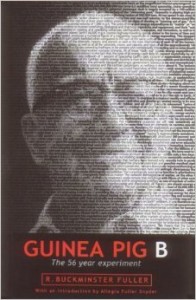
5.0 out of 5 stars6 Star Starting Point for Life Work of a “First Thinker”, March 21, 2014
I've read a number of books by Buckminster Fuller, but it was not until this one that I realized he is the only person that writes longer sentences than I do. He is also, as his daughter notes in the preface, a man who uses words with great precision, and invents words when he is certain none already exist. So many words in fact, that he has his own dictionary, Synergetics Dictionary, the Mind of Buckminster Fuller: With an Introduction and Appendices (4 Vols.).
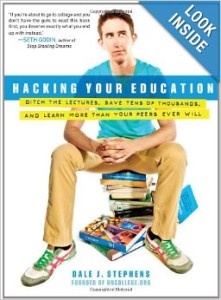
It’s no secret that college doesn’t prepare students for the real world. Student loan debt recently eclipsed credit card debt for the first time in history and now tops one trillion dollars. And the throngs of unemployed graduates chasing the same jobs makes us wonder whether there’s a better way to “make it” in today’s marketplace.
There is—and Dale Stephens is proof of that. In Hacking Your Education, Stephens speaks to a new culture of “hackademics” who think college diplomas are antiquated. Stephens shows how he and dozens of others have hacked their education, and how you can, too. You don’t need to be a genius or especially motivated to succeed outside school. The real requirements are much simpler: curiosity, confidence, and grit.
Hacking Your Education offers valuable advice to current students as well as those who decided to skip college. Stephens teaches you to create opportunities for yourself and design your curriculum—inside or outside the classroom. Whether your dream is to travel the world, build a startup, or climb the corporate ladder, Stephens proves you can do it now, rather than waiting for life to start after “graduation” day.
Author Biography
At 20, Dale Stephens founded UnCollege.org because we're paying too much for college and learning too little. It's no secret that college doesn't prepare students for the real world. Student loan debt recently eclipsed credit card debt for the first time in history and now tops 1 trillion dollars. And the throngs of unemployed graduates chasing the same jobs makes us wonder whether there's a better way to “make it” in today's marketplace.Stephens is a sought-after education expert appearing on major news networks including CNN, ABC, NPR, CBS, Fox, and TechCrunch. His work has been covered by the New York Times and New York Magazine to Fast Company and Forbes.
Stephens' interest in education comes from his background in unschooling, the self-directed form of homeschooling with which he was raised. He left school at age eleven and self-educated instead of going to middle and high school.
He has spoken around the world at high-profile events, from debating Vivek Wadhwa onstage at TED 2012 to lecturing at the New York Times to speaking to C-level executives at NBC Universal. He works frequently with universities who realize their model of education must change to survive in the 21st century.
In May 2011 Stephens was selected out of hundreds of individuals around the world as a Thiel Fellow, a program recognizing the top twenty-four entrepreneurs around the world under the age of twenty. In addition to leading UnCollege, Stephens advises education and technology companies.
A Few Inconvenient Details about Western History, October 29, 2013
Herbert L. Calhoun
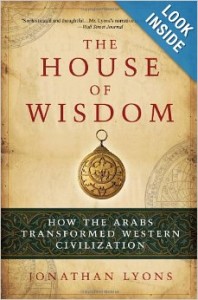
For centuries after the fall of Rome, Western Europe was unaccountably still locked in the dark ages, a period referred to as “dark” for good reasons. Despite the rich intellectual heritage from both Greece and Rome, it is not well known that little of it had seeped into the medieval feudal and violence-torn Western European veins before the thirteenth century. Even less well known is that what little did seep in came by way of the rich history and cultural institutions of the Arab dominated Near East, a region that drunk the intellectual wines of both Greece and Rome nearly a millennium earlier than the West did.
Although Western Europeans were ever ready to fight each other, most of them could not read, write or tell time. There were only a handful of libraries. Neither streets nor people had unique names or numbers. Violence and instability were the order of the day. Even as the Kingdom and the Catholic Church viciously vied for power, Europe was essentially a region being run by “outlaws,” the equivalent of petty warlords that we see today in places like Afghanistan.

 A Few Inconvenient Details about Western History, October 29, 2013