Review: Anyone That Works for a Living and Votes Republican is an Idiot

Amazon Page

Clyde Coughenour

5.0 out of 5 stars Alternative Perspective, Very Naive on US Reality, January 30, 2012

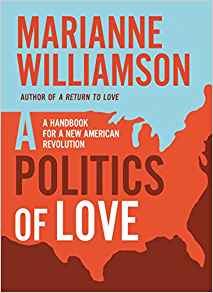
I *like* this book. I’ve been running for the Reform Party nomination for President (there were three of us, now there are two, and I might drop out soon if I get a federal job and the Hatch Act kicks in). I mention that mostly to emphasize that everything I have learned in the six weeks I’ve been registered with the Federal Elections Commission (FEC ID C00507756) is relevant to the second half of my review. This book came to my attention via a press clipping service that helps me follow any mention of a third party — this book calls for a new third party Of, By, and For Workers — we used to call that Communism (just kidding), but seriously, the last part of my review is a pitch for what workers should do if they really want to take charge, as workers finally did in Norway and Sweden (it took them 25 years).

I would normally rate this book at four stars, there is a lot missing, but I have to say that in terms of earnest honest patriotic down-to-earth common sense and indisputable pro-labor attitudes, this book is solid, so I am putting it at five stars and linking below to some books that add the missing “weight” to this read. My reviews of all of the books I list are summary in nature, to help those with little time or little money.

The book is scattered, providing snapshots of all of the issues, showing very clearly where neither party, but especially the Republicans, can be trusted to look out for workers. Politics is theater–nothing is decided in the open, the real deals are behind closed doors and the taxpayer ALWAYS loses. I certainly give the book high marks for distilling a very complicated corrupt mess into a simplified structure, and I totally agree with the author that there are no reliable statistics from the government or corporations, but let me give you three that matter:

Read the rest of this entry »

Comments Off
Jan 30

David Swanson: War and Being and Nothingness

David Swanson

War and Being and Nothingness

The best book I’ve read in a very long time is a new one: The End of War by John Horgan. Its conclusions will be vigorously resisted by many and yet, in a certain light, considered perfectly obvious to some others. The central conclusion — that ending the institution of war is entirely up to us to choose — was, arguably, reached by (among many others before and since) John Paul Sartre sitting in a café utilizing exactly no research.

Horgan is a writer for “Scientific American,” and approaches the question of whether war can be ended as a scientist. It’s all about research. He concludes that war can be ended, has in various times and places been ended, and is in the process (an entirely reversible process) of being ended on the earth right now.

Amazon Page

The war abolitionists of the 1920s Outlawry movement would have loved this book, would have seen it as a proper extension of the ongoing campaign to rid the world of war. But it is a different book from theirs. It does not preach the immorality of war. That idea, although proved truer than ever by the two world wars, failed to prevent the two world wars. When an idea’s time has come and also gone, it becomes necessary to prove to people that the idea wasn’t rendered impossible or naïve by “human nature” or grand forces of history or any other specter. Horgan, in exactly the approach required, preaches the scientific observation of the success (albeit incomplete as yet) of preaching the immorality of war.

Read the rest of this entry »

Comments Off
Jan 21

Review: A Memoir of Injustice

Tags: ,

Amazon Page

Jerry Ray, Tamara Carter

5.0 out of 5 stars Solid Support for THE Book on USG Assassination of MLK,January 17, 2012<

I am unemployed and cannot afford books the way I once could, so my review is actually applause from the sidelines, and a pointer–something I can still do as the #1 Amazon reviewer for non-fiction, toward THE book:

An Act of State: The Execution of Martin Luther King (Updated)

MLK was assassinated at the direction of J. Edgar Hoover, with the active collaboration of the U.S. Army, and one suspects with at least the tacit knowledge of Lyndon Johnson, himself complicit in the assassination of JFK. I note with reverence that Bobby Kennedy calmed a major crowd with a voice close to that of MLK, only to be himself assassinated later. On JFK see:

Read the rest of this entry »

Comments Off
Jan 17

Review: The Military Industrial Compex at 50

Amazon Page

5.0 out of 5 stars America Desperately Needs More Illumination Such as This January 16, 2012

I received a review copy of this book [note to publishers: always ask first] and was glad to be offered a chance to read something as important as this. America desperately needs more illumination on the corruption in our government, and the evil done in our name without our permission but very much at our expense.

As a career veteran of the national security community–the Marine Corps and the Central Intelligence Agency–followed by seventeen years teaching 90 governments — 66 directly — how to get a grip on Open Source Intelligence (OSINT) that provides 95% of what we need to know at 2% or less of the cost of what we spend now on secret intelligence–I am well-qualified to read this book from a patriot’s point of view.

A strong national defense capability does NOT exist in the USA today. Posturing fools such as Senator Rick Santorum have no idea what they are talking about when they seek to discredit those of us who do. The infantry, four percent of the force, takes eighty percent of the casualties and receives ONE PERCENT of the Pentagon budget. Within the other 99%, half–at least–is fraud, waste, and abuse that makes America weaker, not stronger.

This book, edited by David Swanson, is a very good deal at $25. Its 368 pages include chapters from thirty other authors besides the editor, and include contributions from Ray McGovern and Karen Kwiatkowski, whose work I have admired in the past. If there were one flaw in the book, but not so serious as to lose a star, it would be its isolation from the pioneering work done by Pierre Sprey, Chuck Spinney, and Winslow Wheeler, with a genuflection toward John Boyd, the real pioneer of smart sufficient national security.

What is uniquely valuable about this book, something I have not seen elsewhere, is its provision of a holistic examination not just of the military-industrial process and fraudulent, wasteful, abusive bad design, bad performance, and bad cost, but of the costs that the military-industrial complex imposes on all of us and our economy and our society. This is a world-class book that should be translated into other languages to help others avoid our long-running mistakes.

Here are the blinding flashes of solid insight that stayed with me and merit the broadest possible public understanding:

Read the rest of this entry »

Comments Off
Jan 16

Review (Guest): Corporations Are Not People – Why They Have More Rights Than You Do and What You Can Do About It

Amazon Page

Jeffrey D. Clements

5.0 out of 5 stars It’s Worse Than We Thought But More Easily Fixed Than We Imagined,January 8, 2012

David C N Swanson (Charlottesville VA United States) – See all my reviews<

This book should mainstream the campaign to end corporate personhood.

Clements traces the development of the legal doctrine of corporate personhood back long before the Supreme Court’s Citizens United decision two years ago this month, in particular to President Richard Nixon’s appointment of Lewis Powell to the Supreme Court in 1972. Led by Powell’s radical new conception of corporate rights, Clements shows, the court began striking down laws that protected living breathing persons’ rights in areas including the environment, tobacco, public health, food, drugs, financial regulation, and elections.

In 1978 the Supreme Court ruled that corporations had speech rights that prevented banning their money from an election, a conclusion that might have been nearly incomprehensible a decade earlier before the U.S. Chamber of Commerce and various corporate foundations began filling our public discourse with phrases like “corporate speech.” In 1980 Congress forbade the Federal Trade Commission from protecting children or students from junk food advertising and sales. In 1982 corporate speech rights in the U.S. Supreme Court overturned a state law that had attempted to block energy companies from promoting greater energy consumption. In the 1990s, the Monsanto corporation, whose genetically engineered drug was banned in many countries, won the right to include it in milk in the United States and the “right not to speak,” thereby overturning a law requiring that milk be labeled to indicate the drug’s presence.

Decision after decision has extended corporate rights to a position of priority over actual human rights on everything from food and water and air to education and healthcare and wars. The ground has shifted. In 1971 Lewis Powell argued on behalf of the cigarette companies that they had a corporate person’s right to use cartoons and misleading claims to get young people hooked on nicotine, and he was laughed out of court. In 2001, the Supreme Court struck down a state law banning cigarette ads within 1,000 feet of schools and playgrounds. The reason? The sacred right of the corporate person, which carries more weight now than the rights of the people of a community to protect their children … er, excuse me, their “replacement smokers.”

And why do corporate rights carry so much weight? One reason is that, as Clements documents and explains, “transnational corporations now dominate our government” through election spending. This is why a civilized single-payer health coverage system like those found in the rest of the wealthy nations of the world is not “practical.” This is why cutting military spending back to 2007 levels would mean “amageddon” even though in 2007 it didn’t. This is why our government hands oil corporations not only wars and highways but also massive amounts of good old money. This is why we cannot protect our mountains or streams but can go to extraordinary lengths to protect our investment bankers.

“Since the Citizens United decision in 2010,” Clements writes, “hundreds of business leaders have condemned the decision and have joined the work for a constitutional amendment to overturn expanded corporate rights.” You might not learn this from the corporate media, but there is a widespread and growing mainstream understanding that abuse by oversized mega-corporations has been disastrous for ordinary businesses as well as communities, families, and individuals. Clements’ turns out to be a pro-business, albeit anti-U.S. Chamber of Commerce, book.

And what can be done? We can build an independent, principled, and relentless Occupy movement and include as a central demand the amending of the U.S. Constitution to end corporate personhood. Clements’ book offers a draft amendment, a sample resolution, a collection of frequently asked questions (and answers), a list of organizations, websites, resources, books, and campaigns.

This is doable, and it is what we should do this election year so that in future election years we might actually have elections.

Comments Off
Jan 9

Review: Britain’s Empire – Resistance, Repression and Revolt

Tags:

Amazon Page

Richard Gott

5.0 out of 5 stars Preliminary Review: Understanding the Trade-Offs & True Cost of Empire,December 8, 2011

I have ordered this book and am very much looking forward to providing readers (and myself, this is how I keep notes) with one of my more detailed reviews. The publisher is to be scolded for not using Inside the Book, one of Amazon’s best features, and for failing to provide the best possible use of the Book Description and Editorial Reviews section. While the existing review is good and I have voted for it, it does not do this book justice. My decision to buy was based on the easily found review in The Guardian (UK) by Richard Drayton, “Britain’s Empire: Resistance, Repression, and Revolt by Richard Gott — review,” published 7 December 2011.

Where I am going to go with my review is toward an in-depth articulation of what has never been done before that I know of, an examination of the trade-offs of Empire and the opportunity costs of Epoch A hierarchical “rule by secrecy.” I have reviewed many books on Empire, Class War, Elite Rule, all easily found in master list online, Worth a Look: Book Review Lists (Negative). I also recommend the observe, Worth a Look: Book Review Lists (Positive).

Russell Ackoff would say that Empire represents centuries of doing the wrong thing righter–and at greater expense across the political-legal, socio-economic, ideo-cultural, techno-demographic, and natural-geographic domains. As we approach the Mayan calendar’s start date for Epoch B, 12 December 2012, many of us are conscious that we must abandon old ways and rethink how we organize society. Occupy is a sympton of this – organized people against organized money, organized consciousness against organized violence.

Read the rest of this entry »

Comments Off
Dec 8

Review: Embracing Israel / Palestine

Tags:

Michael Lerner

5.0 out of 5 stars Beyond Five Stars-A Liberating / Empowering Book,December 6, 2011

1. On first impressions the book is a major slam. The author and publisher have collected some of the most serious testimonials possible–better than any I have seen on a book of this type.

2. Ten chapters, each chapter at least five segments, means over 50 “snapshots, each easy to digest–my only disappointment with this book is that it fails to provide maps at key points. My favorite book in this regard is Nelson’s Complete Book of Bible Maps and Charts, 3rd Edition.

3. I cannot do this book justice. The first and most positive impression I get halfway through the book is that this is a Cliff Note’s for smart busy people, boiling down history, philosophy, and putting everything in a sensible context. I dismissed the religion requirement in college, now I am finding that religion is “core” to everything I encounter and if I had to do it over again, would take multiple religion courses as part of my liberal arts education. Certainly this book is a phenomenal offering for any student of any age, as well as adult continuing education.

4. Put bluntly, this book skewers the Zionist hypocrites by name, by government, by time period, by deceptive “offering.” This is not a book that does the same for the Palestinians, I certainly would like to see such a book that could also in passing skewer the Arab dictators as well as the European “enablers” that have made it possible for so much genocide and so many other atrocities to occur for so long in Palestine.

5. The book ends with six strategies, a deeply spiritual and totally practical final chapter on values and emancipation, a section on questions and answers, and an appendix on resources for peace.

6. What I had NOT expected at all, was the RADICAL itemization of ideas from the Bible that are not radical as much as they are FUNDAMENTAL, and including to my enormous surprise, both the seventh year sabatical with debt forgiveness, and the fifty year jubilee with total debt forgiveness across the board. These two–and everything else about this book–make it as timely as one could wish for dealing with the global financial crisis that boils down to corrupt banks eating corrupt governments.

7. I have to read this book again. Being nagged (comment below) led me to rush this out, mostly to honor the author and the spirit of the ideas in this book, but this review is shamefully inadequate–I need to do for this book what I did for Daniel Elsberg’s Secrets: A Memoir of Vietnam and the Pentagon Papers, create a table with key points, keywords, do a sort, and then write a summary. I fear I will not get to that anytime soon, so this is my best for now.

Other books I have reviewed and recommend along with this one:

Poets For Palestine
Surrender to Kindness: One Man’s Epic Journey for Love and Peace
Philosophy and the Social Problem: The Annotated Edition
Lessons of History 1ST Edition
Consilience: The Unity of Knowledge

My older preliminary comments:

1. I got to know the author by reading his earlier book, Left Hand of God, The: Healing America’s Political and Spiritual Crisis one of a handful of truly brilliant books on religion that are included in my online list at Phi Beta Iota Worth a Look: Book Reviews on Religion. Jim Wallis’ God’s Politics: Why the Right Gets It Wrong and the Left Doesn’t Get It is another, and Dave Johnston’s Faith- Based Diplomacy Trumping Realpolitik another.

2. What characterizes all books with sensible implementable solutions is one word: INTEGRITY. When politics, intelligence, or commerce lose their integrity, they become corrupt, and as I wrote in my January 2011 letter to The Most Holy Father, “corruption in the secular world is an obstacle to spiritual harmony” and later in the letter, “we need a faith-based global intelligence exchange.” To my enormous surprise, many months later the Vatican pumped out a declaration along these lines (search for Vatican, Ethics, & Truth).

3. There are in my view three “ground-zeros” today for anyone contemplating how to create a prosperous world at peace. The first is Palestine (remember Gandhi: “Palestine is to the Palestinians as France is to the French,”) and what has become an Israeli Zionist plague of genocide and other atrocities perpetrated against the Palestinian people against the wishes of moderate ethical Jews and all others who wish to see a prosperous safe Israel that is not a caricature of Nazi Germany in how it treats “the other.” The second is the global financial system that the Rothchilds and Goldman Sachs [and the Chinese-Indonesian gold masters] have managed to dominate to the point of its–and our–near-death experience. I am a huge fan of Truth & Reconciliation and seek no retrospective vengeance, but it is time for the Rothchilds and Goldman Sachs to go out of business and be absent from the affairs of men. The third is water. I have reviewed twelve books on water here at Amazon and for UNESCO, any my essay containing all reviews can be found by searching for Reference: WATER-Soul of the Earth, Mirror of Our Collective Souls.

Vote and/or Comment on Review

Comments Off
Dec 6

Review: Delusional Democracy – Fixing the Republic Without Overthrowing the Government [

Amazon Page

Joel Hirschhorn (Author)

4.0 out of 5 stars Needs Updating, A Fine Start, Some Serious Mis-Steps,November 25, 2011

This is an important book, one of many about the downfall of democracy in the USA with some suggestions for action that are a mix of great ideas, out of date items, and a couple, such as Instant Run-Off, that I also fell prey to and have now been corrected on by the crowd-sourcing of the Electoral Reform Act of 2012 (easy to find online).

First off, the author was well-ahead of his time and this book joins four books in particular:

Grand Illusion: The Myth of Voter Choice in a Two-Party Tyranny
Running on Empty: How the Democratic and Republican Parties Are Bankrupting Our Future and What Americans Can Do About It
Breach of Trust: How Washington Turns Outsiders Into Insiders
The Broken Branch : How Congress Is Failing America and How to Get It Back on Track (Institutions of American Democracy)

Here is what the author himself summarizes as the key changes we need to make–I agree that Electoral Reform is the ONE THING that we can all agree on, but he has not availed himself of all of the expertise possible as I have in my open call for input, so we each lose one star–I wrote a book that was not focused on solutions, and he has written a book that needs to be updated and fleshed out.

A number of electoral reforms are necessary to rescue American democracy:

Read the rest of this entry »

Comments Off
Nov 25

Review: The KunstlerCast – Conversations with James Howard Kunstler

Amazon Page

Duncan Crary, James Howard Kunstler

5.0 out of 5 stars Unique in Its Own Right, NOT a Substitute for Long Emergency,November 20, 2011

THIS IS AN OCCUPY BOOK. It illuminates legitimate grievances being talked about by Occupy.

First, having read The Long Emergency: Surviving the End of Oil, Climate Change, and Other Converging Catastrophes of the Twenty-First Century, I urge anyone interested in this book to buy both. They are completely different. This book is not a substitute for the first book.

Second, although the “author” Duncan Crary takes great pains to minimize his role, I have dealt with massive transcripts and historical artifacts covering long spans and would say that he has done a heroic job–he has excelled–at pulling out “just enough, just right” pieces and ordering them into the following section (since Look Inside the Book is not available, I list them):

Read the rest of this entry »

Comments Off
Nov 20

Review: Who’s To Say What’s Obscene – Politics, Culture, and Comedy in America Today

Tags:

Amazon Page

Paul Krassner

5.0 out of 5 stars Less Funny, More Provocative–Price is a WOW,November 20, 2011

First, a confession. I am 59 years old and had no idea who Paul Krassner was/is. The more I read through the book the more I marveled at his pioneering endeavors and their continuing relevance as Occupy struggles to find its voice and focus. So for all the folks that don’t know who Paul Krassner is, at under $3.00 this book is a WOW value, and I recommend it for that alone.

This is NOT a funny book. There are a few places here and there where one can see the deep tragic comedy possibility, but more than anything this is a very provocative book that beats a single theme: the obscenity of all that we allow to be done in our name, to our bodies and our environment, to our families, schools, economy, and the Republic itself. Obscene, they name is a two-party tyranny and a Congress so corrupt they shame every dictator (all 40+ of them, all but two “best pals” of the US Government) in their craven greed and lack of democratic integrity.

Read the rest of this entry »

Comments Off
Nov 20